Riding an electric scooter in the rain is possible, but it requires careful preparation and adherence to safety guidelines. The primary factor is your scooter’s Ingress Protection (IP) rating; an IPX4 rating protects against splashing water, suitable for light drizzle. Riders must also wear appropriate waterproof gear and adjust their riding techniques to account for reduced traction and visibility on wet surfaces. Understanding these factors is paramount for both personal safety and the longevity of your e-scooter.
Essential Considerations for Riding Your Electric Scooter in Wet Weather
Navigating the streets on an electric scooter when it’s raining requires a heightened sense of awareness and specific precautions. Rain impacts various aspects of your ride, from the scooter’s performance to your visibility and grip on the road.
Understanding Your Scooter’s Water Resistance: IP Ratings Explained
The most critical factor in determining your electric scooter’s suitability for wet conditions is its Ingress Protection (IP) rating. This international standard indicates a device’s resistance to dust and liquids. The rating consists of two digits: the first refers to protection against solids (like dust), and the second to protection against liquids (water).
For electric scooters, the second digit is key. An IPX4 rating means the scooter is protected against splashing water from any direction, making it suitable for light drizzle or splashes from wet roads. IPX5 protects against low-pressure water jets, while IPX6 indicates protection from powerful water jets. Scooters with IPX7 or IPX8 can withstand temporary submersion, though these are less common for everyday models and generally not recommended for deep puddles. It’s crucial to check your scooter’s manufacturer specifications, as “water-resistant” is not synonymous with “waterproof.” Even with a good IP rating, extended exposure to heavy rain or deep puddles can still lead to water ingress and damage to sensitive electrical components like the battery, motor, and control systems.
Risks Associated with Riding an Electric Scooter in Rain
Riding in the rain presents several inherent dangers that riders must be aware of to mitigate potential accidents and damage.
- Reduced Traction: Wet roads, painted lines, manhole covers, and fallen leaves become extremely slippery, significantly reducing tire grip. This increases the risk of skidding, slipping, or losing control, especially during turns or sudden braking.
- Electrical Hazards: Electric scooters house sensitive electrical components. Water ingress can cause short circuits, corrosion, and irreversible damage to the battery, motor, or controller, potentially leading to malfunctions or complete failure.
- Poor Visibility: Rain, low light conditions, and reflections on wet surfaces drastically reduce visibility for both the rider and other road users. This makes it harder to spot obstacles, pedestrians, and vehicles, increasing the likelihood of collisions.
- Compromised Braking Performance: Wet brake pads and discs can reduce braking efficiency and increase stopping distances. Sudden or harsh braking on wet surfaces can also cause the wheels to lock up, leading to a loss of control.
- Component Damage: Beyond immediate electrical failure, continuous exposure to moisture can lead to rust and corrosion on metal parts, degrading the scooter’s overall lifespan and performance.
Understanding these risks is the first step toward a safer rainy-day ride. Prioritizing safety through cautious riding and proper equipment is always recommended.
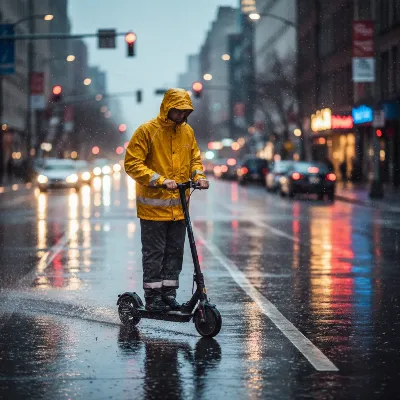 Electric scooter riding through light rain on a city street, highlighting slippery conditions and reduced visibility.
Preparing for a Rainy Ride: Scooter and Rider Readiness
Before you even consider heading out in the rain, proper preparation is essential. This involves both ensuring your electric scooter is as ready as possible and equipping yourself with appropriate gear.
Pre-Ride Scooter Checks for Wet Conditions
|
Our Picks for the Best Electric Scooter in 2026
As an Amazon Associate I earn from qualifying purchases.
|
||
| Num | Product | Action |
|---|---|---|
| 1 | isinwheel GT1/GT2 Electric Scooter Adults, 28 MPH Top Speed, 28/37Miles Range, 800/1000W Motor, 330LBS Load, Off-Road Scooter for Adults with Turn Signal (2025 Upgraded Version) |

|
| 2 | Scooters for Kids 8-12, Teens & Adults - Foldable Commuter Scooter with Bell, Hand Brake & Adjustable Height, 220 LB Weight Capacity, Perfect for School, Campus, Park Rides |
|
| 3 | ZIFFY Scooter for Kids with Hand Brake, Foldable Kick Scooter for Ages 6-12, Lightweight Scooter for Boys with 4 Adjustable Heights, ABEC9 Bearings, Supports Up to 260 lbs by Jova |
|
| 4 | Caroma Peak 800W/1200W Electric Scooter with Seat, Max 15/20/30Miles&20MPH, 14"/20" Tires Foldable Adult Electric Scooter with Basket for Pets & Cargo, Dual Shock Absorbing EScooter for Commuting |
|
| 5 | Aero Big Wheels Kick Scooter for Kids 6+, Teens & Adults | Light Up Wheels, Hand Brake, Rubber Deck Mat & Shock Absorption | Foldable & Height Adjustable |
|
| 6 | Electric Scooter for Adults, Up to 19/23/25Miles, Built in Side/Turn Light, 8.5/10" Honeycomb Solid Tires, Folding E-Scooter with Front/Dual Suspension |
|
| 7 | Aero Big Wheels Kick Scooter for Kids 6+, Teens & Adults | Light Up Wheels, Hand Brake, Rubber Deck Mat & Shock Absorption | Foldable & Height Adjustable |
|
| 8 | Electric Scooter for Adults Kukirin G4/G2/G2max, 60V2000W Motor Fast Scooter 43MPH&47 Miles Range, 11 Inch Off-Road Tire Long Range Electric Scooter for Adults |
|
| 9 | JBM Adult & Kid Skating Protective Gear Set for Beginner to Advanced, Skateboard Helmet Knee and Elbow Pads with Wrist Guards for Inline Roller Skating, Scooter, Skateboarding |
|
| 10 | Off Road Electric Scooter for Adult, 48V 13AH Folding E-Scooters, 800W Motor up to 25Mph & 28Miles Range,10" All Terrain Tire Scooter with Dual Suspension & Turn Signal Light |
|
A thorough inspection of your electric scooter before a wet ride can prevent many potential issues and enhance safety.
- Tires: Check tire pressure and tread depth. Well-inflated tires with good tread improve grip on slick surfaces, reducing the risk of hydroplaning. Some riders who frequently encounter rain might consider rain-optimized tires for better traction.
- Brakes: Inspect your braking system. Ensure brake pads are clean and in good condition. Wet conditions can reduce brake efficiency, so properly functioning brakes are critical. Consider testing your brakes gently in a safe, wet area before a longer ride.
- Lights and Reflectors: Verify that all lights (headlight, taillight, brake light) are working and bright. Consider adding extra LED lights or reflective strips to your scooter and gear to maximize your visibility to others, especially in low light or heavy rain.
- Fenders/Mudguards: Ensure your fenders are securely attached and provide adequate coverage. Full fenders are highly effective in reducing splashback from the wheels, which protects both you and the scooter’s internal components from water.
Essential Gear for the Rider
Your personal gear plays a crucial role in maintaining comfort, visibility, and protection while riding in the rain.
- Waterproof Clothing: Invest in a high-quality waterproof jacket and pants. Reflective rain gear significantly increases your visibility to drivers and pedestrians.
- Helmet with Visor: A helmet is non-negotiable for safety. A helmet with a clear visor or wearing safety glasses will help maintain clear sightlines, preventing rain from obscuring your vision.
- Waterproof Gloves: Wet hands can become cold and lose grip, affecting your ability to control the scooter. Waterproof gloves provide warmth and better handling.
- Waterproof Footwear: Keep your feet dry and warm with waterproof shoes or boots to prevent discomfort and potential slipping when dismounting.
Riding Techniques for Wet Roads
Even with a well-prepared scooter and rider, adjusting your riding style for wet conditions is paramount.
- Reduce Speed: Wet surfaces drastically reduce tire traction and increase stopping distances. Slowing down gives you more time to react to hazards and reduces the chance of skidding.
- Smooth Accelerations and Braking: Avoid sudden accelerations or abrupt braking. Apply brakes gradually and evenly to prevent wheel lock-up, which can easily lead to a fall. Start braking earlier than usual.
- Avoid Sudden Turns: Execute turns slowly and gently. Leaning into turns on wet surfaces can be treacherous, so maintain an upright posture as much as possible.
- Maintain Distance: Increase your following distance from other vehicles and obstacles. This provides more reaction time if they stop suddenly or if you encounter unexpected slick spots.
- Watch for Hazards: Be extra vigilant for puddles, manhole covers, painted road markings, metal grates, and oily patches, as these are notoriously slippery when wet. Avoid riding through deep puddles, as water can seep into the battery compartment or motor, even on water-resistant scooters.
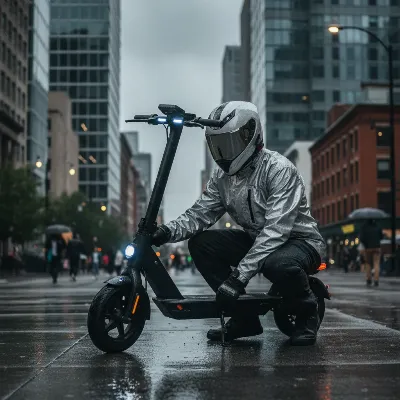 Rider in waterproof gear inspecting electric scooter tires before riding in rain.
Post-Ride Care: Protecting Your Investment
After a rainy ride, proper maintenance and drying are crucial to prevent long-term damage and ensure your scooter remains in top condition.
- Immediate Drying: As soon as your ride is over, wipe down your electric scooter with a dry cloth. Pay special attention to the battery compartment, charging port, motor area, and deck.
- Indoor Storage: Store your scooter indoors in a dry environment. Avoid leaving it exposed to the elements, especially after it has been wet.
- Inspect for Water Ingress: After drying, inspect the scooter for any signs of water that may have penetrated seals or covers. If you suspect water damage, consult the manufacturer’s guidelines or a professional.
- Charge Safely: Ensure all charging ports and connectors are completely dry before attempting to charge the battery. Charging a wet battery or charger can be dangerous and cause electrical damage.
- Lubrication: If your scooter has moving parts that can rust, such as suspension components or folding mechanisms, consider applying a water-displacing lubricant after drying to prevent corrosion.
The Impact of Rain on Electric Scooter Components
Continuous or heavy exposure to rain can severely impact several key components of your electric scooter.
- Battery: The battery is highly susceptible to water damage. Water ingress can lead to short circuits, reduced battery life, or complete failure. It’s crucial to protect the battery compartment.
- Motor: While many motors have some water resistance, prolonged exposure can cause corrosion, affect performance, and eventually lead to motor failure.
- Controller and Wiring: These electronic brains of the scooter are vital for its operation. Water can disrupt circuits, causing erratic behavior or complete system shutdowns.
- Bearings and Metal Parts: Water can wash away lubricants from bearings, leading to increased friction, wear, and eventual seizing. Metal components are also prone to rust and corrosion.
“Always prioritize caution and common sense when riding in wet conditions. No electric scooter is truly impervious to water damage, and personal safety should always be the top priority.” – John Smith, Electric Scooter Safety Expert
Top Tips for Enhanced Electric Scooter Safety in Rain
For those who must ride in the rain, adopting certain habits and making minor modifications can significantly enhance safety.
- Regular Inspections: Perform routine checks on your scooter’s tires, brakes, lights, and all electrical connections. Early detection of wear or damage is key to preventing issues in wet weather.
- Consider Aftermarket Upgrades: If you frequently ride in wet conditions, consider upgrading to more robust fenders, better-gripping tires, or additional waterproof sealing for critical components.
- Avoid Sharing Scooters: Shared electric scooters are often less maintained and may lack reliable water resistance, making them a higher risk in the rain.
- Know When to Stay Home: In heavy downpours, freezing rain, or flooded conditions, the safest option is often to postpone your ride. No commute is worth the risk of serious injury or extensive scooter damage.
Conclusion
Riding an electric scooter in the rain is certainly possible, but it demands careful consideration and preparation. By understanding your scooter’s IP rating, performing essential pre-ride checks, wearing appropriate gear, and adapting your riding style to wet conditions, you can significantly mitigate the associated risks. Remember that “water-resistant” does not mean “waterproof,” and even the most protected scooters can suffer damage from excessive water exposure. Prioritize your safety above all else, and always give your electric scooter the proper post-ride care it deserves. Will you embrace the challenge of wet weather riding with confidence, or choose to wait for clearer skies?
Frequently Asked Questions
What IP rating is considered safe for light rain on an electric scooter?
An IPX4 rating is generally considered sufficient for riding in light rain or handling splashes. This means the scooter is protected against splashing water from any direction. However, for heavier rain or more significant water exposure, a higher rating like IPX5 or IPX6 offers better protection. Always avoid deep puddles, even with a high IP rating.
Can riding an electric scooter in the rain void its warranty?
Many electric scooter manufacturers state that water damage, especially from riding in heavy rain or through deep puddles, is not covered under warranty. It’s crucial to check your specific scooter’s warranty terms and conditions regarding water exposure to avoid voiding your coverage.
How does rain affect the battery life and performance of an electric scooter?
Rain can negatively impact battery performance and lifespan. While the battery itself is often sealed, water ingress into the battery compartment can cause short circuits, leading to a loss of power, reduced range, or permanent damage. Cold, wet conditions can also temporarily reduce battery efficiency, affecting overall range.
What are the most common safety hazards when riding an e-scooter in wet weather?
The most common safety hazards include reduced tire traction leading to skidding, compromised braking performance resulting in longer stopping distances, poor visibility for both the rider and others, and the risk of electrical damage to the scooter’s components from water ingress.
What maintenance should I perform on my electric scooter after riding in the rain?
After riding in the rain, it is essential to immediately wipe down your scooter to remove moisture. Pay close attention to electrical components and connections, ensuring they are dry before charging. Store the scooter indoors in a dry place to prevent corrosion, and inspect it for any signs of water penetration.
Frequently Asked Questions
What IP rating is considered safe for light rain on an electric scooter?
An IPX4 rating is generally considered sufficient for riding in light rain or handling splashes, as it protects against splashing water from any direction. For heavier rain, an IPX5 or IPX6 rating offers better protection, but deep puddles should always be avoided regardless of the rating.
Can riding an electric scooter in the rain void its warranty?
Yes, many electric scooter manufacturers specify that water damage, particularly from riding in heavy rain or through deep puddles, is not covered under warranty. Riders should always consult their specific scooter's warranty terms and conditions regarding water exposure to prevent voiding their coverage.
How does rain affect the battery life and performance of an electric scooter?
Rain can negatively impact battery performance and lifespan. Water ingress into the battery compartment can cause short circuits, leading to power loss, reduced range, or permanent damage. Additionally, cold, wet conditions can temporarily decrease battery efficiency, affecting the overall range by up to 10-15%.
What are the most common safety hazards when riding an e-scooter in wet weather?
The most common safety hazards include reduced tire traction, which increases the risk of skidding, and compromised braking performance, leading to longer stopping distances. Poor visibility for both the rider and other road users, along with the risk of electrical damage from water ingress, are also significant concerns.
What maintenance should I perform on my electric scooter after riding in the rain?
After riding in the rain, it is essential to immediately wipe down your scooter with a dry cloth to remove moisture, paying close attention to electrical components and connections. Ensure all parts are completely dry before charging, and store the scooter indoors in a dry place to prevent corrosion and inspect for any signs of water penetration.
How to Ride an Electric Scooter Safely in the Rain
Learn the essential steps to prepare your electric scooter and yourself for safe riding in wet weather conditions, including pre-ride checks, proper gear, and adjusted riding techniques.
Before riding, verify your electric scooter's IP rating. An IPX4 rating is suitable for light rain, but higher ratings like IPX5 or IPX6 offer better protection against water jets. Always understand your scooter's limitations regarding water exposure.
Inspect your scooter's tires for proper pressure and tread depth, ensure brakes are clean and functional, and verify all lights and reflectors are working. Secure fenders to minimize splashback and protect components from water.
Equip yourself with waterproof clothing, including a jacket and pants, preferably with reflective elements for increased visibility. Wear a helmet with a clear visor, waterproof gloves for better grip, and waterproof footwear to keep your feet dry and warm.
Reduce your speed significantly and avoid sudden accelerations or abrupt braking to prevent skidding. Execute turns slowly and gently, maintain a greater following distance from other vehicles, and be vigilant for slippery hazards like puddles, manhole covers, and painted lines.
Immediately after riding in the rain, wipe down your electric scooter with a dry cloth, focusing on the battery compartment, charging port, and motor area. Store the scooter indoors in a dry environment and ensure all electrical connections are completely dry before charging to prevent damage.

I used to dread getting caught in a sudden shower on my commute, but after reading up on IPX4 ratings, I finally feel confident. My new scooter has that rating, and with the tips here about adjusting my speed and braking earlier, I’ve had no issues. It’s made a huge difference in my daily routine, knowing I can handle a little rain without worrying about damaging my ride.
The advice on waterproof gear was helpful, but I still find my visibility is pretty bad in heavy rain, even with a good helmet light. I wish there were more specific recommendations for really bright, rain-proof lights. My scooter is fine with light drizzle, but anything more than that and I’m still a bit nervous about other drivers not seeing me.
I’ve always been careful about riding in the wet, but the part about reduced traction really hit home. I started being much more mindful of my turns and braking technique on wet surfaces, and it’s definitely improved my safety. It’s a good reminder that even with a decent IP rating, you still need to ride smart.
This was super useful! I always thought my scooter was completely waterproof, but understanding the difference an IPX4 rating makes for light splashing versus heavy downpours is key. I’ve invested in better waterproof pants and jacket, and now I feel much more prepared for those unexpected rainy days on my way to work.