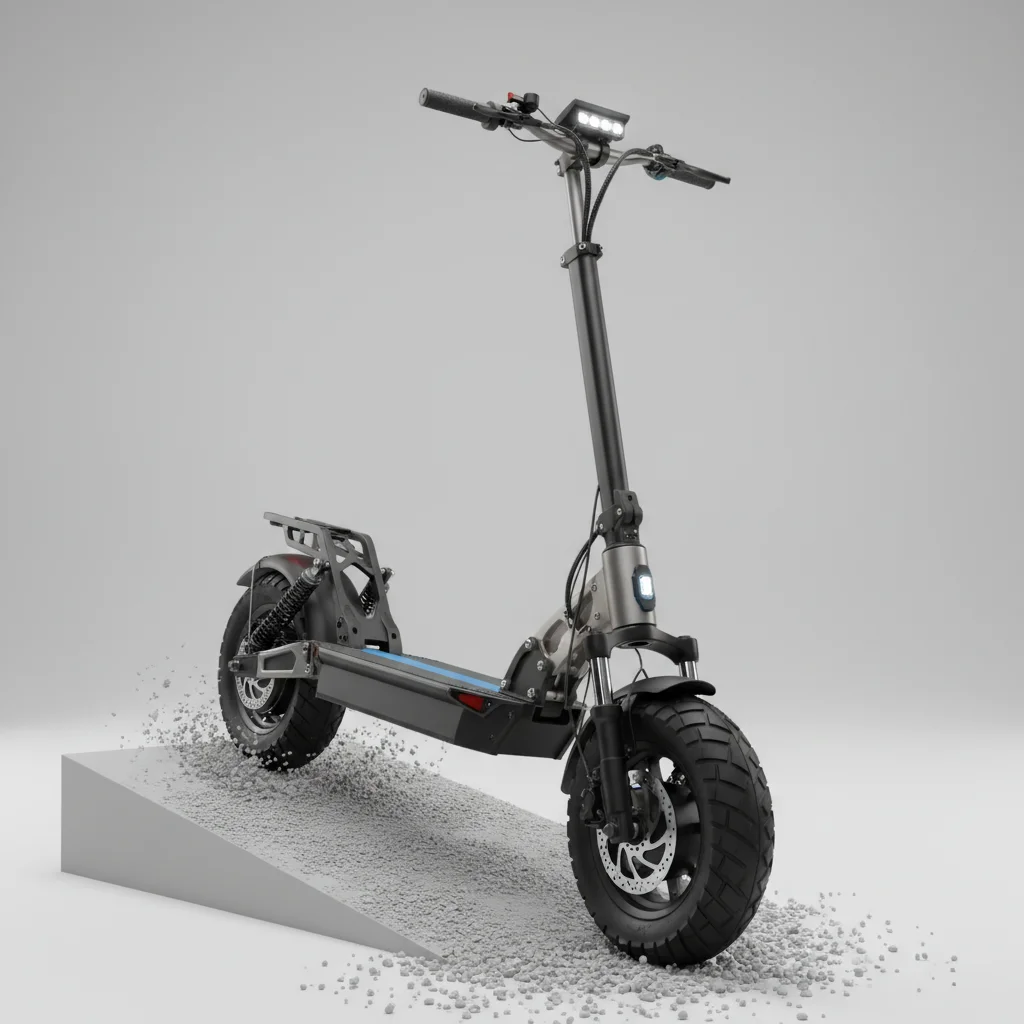
Electric scooters can typically climb hills with a gradient of 10 to 20 degrees, though high-performance models can tackle inclines up to 30 degrees. This capability is primarily determined by the scooter’s motor power, battery output, and rider weight. Understanding these factors is crucial for choosing a scooter that can handle your local terrain.
Understanding Hill Climbing Grades
Hill climbing ability is often expressed as a percentage or degree. A 10-degree incline is roughly equivalent to an 18% grade, while a 20-degree incline is about a 36% grade. Most entry-level electric scooters are designed for urban environments with relatively flat or gently sloping roads, making them suitable for grades up to 15%. More powerful scooters, often with higher wattage motors, are engineered to conquer steeper challenges.
Motor Power and Torque
The motor is the heart of an electric scooter’s hill-climbing prowess. Scooters with higher wattage motors (e.g., 500W to 1000W and above) generate more torque, which is the rotational force needed to push the scooter uphill. Dual-motor scooters, which distribute power to both wheels, offer superior traction and climbing ability compared to single-motor models. For consistent hill climbing, look for scooters with a continuous motor output rather than just peak power figures.
Battery Output and Efficiency
While the motor provides the power, the battery delivers it. A battery with a higher voltage (e.g., 48V or 60V) can supply more consistent power to the motor, especially under load. The battery’s capacity (measured in Ah) also plays a role, as a larger capacity can sustain higher power output for longer durations, preventing performance drops on extended climbs. Efficient power delivery from the battery ensures the motor can operate at its optimal performance when tackling inclines.
Rider Weight and Load
|
Our Picks for the Best Electric Scooter in 2026
As an Amazon Associate I earn from qualifying purchases.
|
||
| Num | Product | Action |
|---|---|---|
| 1 | Caroma Peak 800W/1200W Electric Scooter with Seat, Max 15/20/30Miles&20MPH, 14"/20" Tires Foldable Adult Electric Scooter with Basket for Pets & Cargo, Dual Shock Absorbing EScooter for Commuting |

|
| 2 | isinwheel GT1/GT2 Electric Scooter Adults, 28 MPH Top Speed, 28/37Miles Range, 800/1000W Motor, 330LBS Load, Off-Road Scooter for Adults with Turn Signal (2025 Upgraded Version) |
|
| 3 | Scooters for Kids 8-12, Teens & Adults - Foldable Commuter Scooter with Bell, Hand Brake & Adjustable Height, 220 LB Weight Capacity, Perfect for School, Campus, Park Rides |
|
| 4 | Aero Big Wheels Kick Scooter for Kids 6+, Teens & Adults | Light Up Wheels, Hand Brake, Rubber Deck Mat & Shock Absorption | Foldable & Height Adjustable |
|
| 5 | ZIFFY Scooter for Kids with Hand Brake, Foldable Kick Scooter for Ages 6-12, Lightweight Scooter for Boys with 4 Adjustable Heights, ABEC9 Bearings, Supports Up to 260 lbs by Jova |
|
| 6 | Electric Scooter for Adults Kukirin G4/G2/G2max, 60V2000W Motor Fast Scooter 43MPH&47 Miles Range, 11 Inch Off-Road Tire Long Range Electric Scooter for Adults |
|
| 7 | JBM Adult & Kid Skating Protective Gear Set for Beginner to Advanced, Skateboard Helmet Knee and Elbow Pads with Wrist Guards for Inline Roller Skating, Scooter, Skateboarding |
|
| 8 | Aero Big Wheels Kick Scooter for Kids 6+, Teens & Adults | Light Up Wheels, Hand Brake, Rubber Deck Mat & Shock Absorption | Foldable & Height Adjustable |
|
| 9 | Off Road Electric Scooter for Adult, 48V 13AH Folding E-Scooters, 800W Motor up to 25Mph & 28Miles Range,10" All Terrain Tire Scooter with Dual Suspension & Turn Signal Light |
|
| 10 | Electric Scooter for Adults, Up to 19/23/25Miles, Built in Side/Turn Light, 8.5/10" Honeycomb Solid Tires, Folding E-Scooter with Front/Dual Suspension |
|
The total weight on the scooter significantly impacts its hill-climbing performance. A heavier rider or additional cargo will require more power from the motor to ascend the same incline. Most electric scooters have a maximum weight limit, and exceeding this can severely diminish hill-climbing capabilities and potentially strain the motor and battery. Always consider your weight and any typical load when evaluating a scooter’s stated hill-climbing specifications.
Tire Type and Traction
The type and condition of your tires also contribute to effective hill climbing. Pneumatic (air-filled) tires generally offer better grip and shock absorption than solid tires, which is beneficial on uneven or slippery inclines. Wider tires can also provide a larger contact patch, enhancing traction. Ensure your tires are properly inflated and have adequate tread for the terrain you’ll be encountering. For off-road or very steep climbs, knobby tires designed for increased grip are often preferred.
- Check motor wattage (500W+ for moderate hills).
- Prioritize higher voltage batteries (48V+).
- Consider dual-motor models for steep inclines.
- Stay within the scooter’s maximum weight limit.
- Ensure tires have good tread and proper inflation.
Choosing an electric scooter with robust hill-climbing capabilities means evaluating more than just its top speed. Focus on motor power, battery specifications, and the scooter’s overall design to ensure it can handle the gradients you encounter daily. For riders in hilly areas, investing in a scooter specifically designed for performance and torque will provide a much more satisfying and reliable experience.These models often feature advanced controllers and robust frames to withstand the demands of frequent uphill travel.
Before making a purchase, it’s always recommended to check user reviews and manufacturer specifications regarding hill-climbing performance. Some manufacturers provide specific grade percentages, while others offer general guidance. Remember that real-world performance can vary based on factors like temperature, tire pressure, and the rider’s technique.A test ride on a similar incline, if possible, can provide the most accurate assessment of a scooter’s true capabilities.
