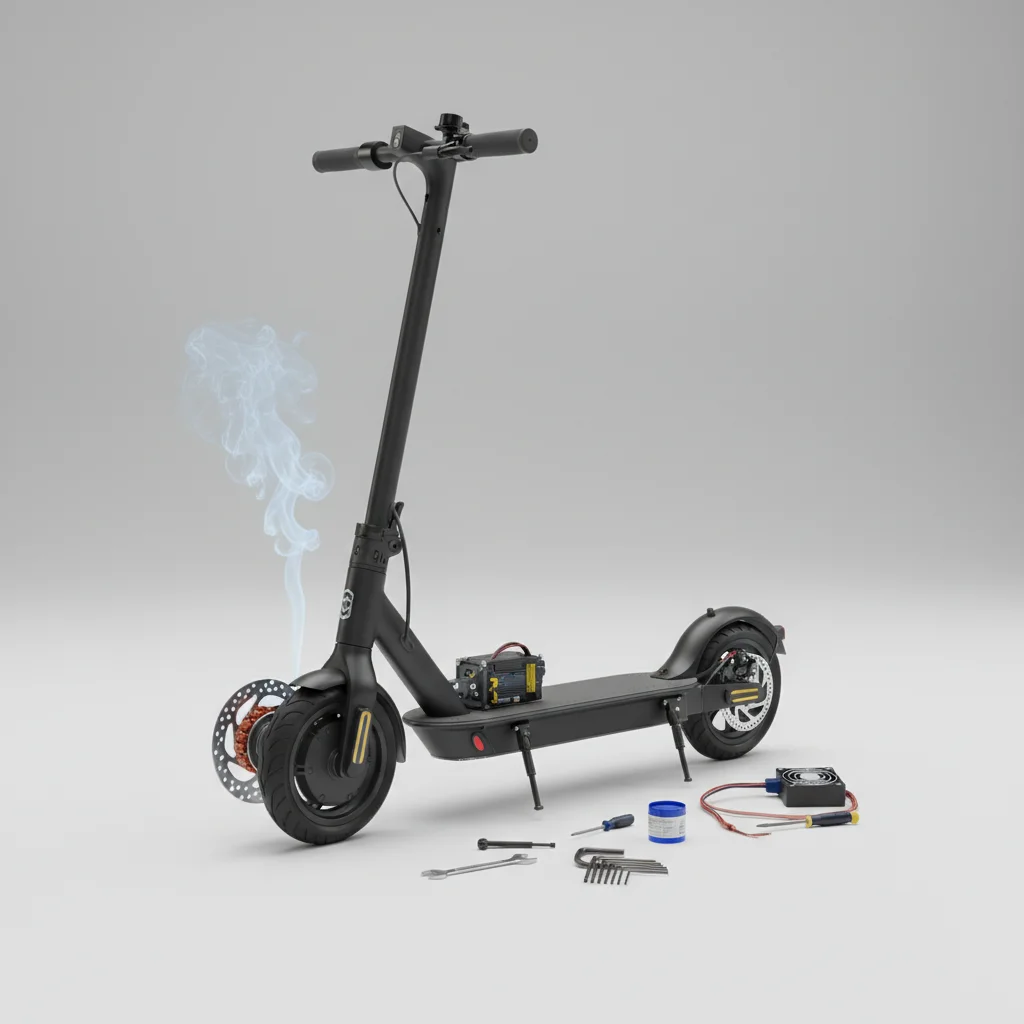
Electric scooters can sometimes develop various noises, which can be a sign of a minor issue or something more significant. Understanding the source of these sounds is the first step to resolving them. There are typically five common types of noises you might hear from your electric scooter, each with its own set of potential causes and solutions.
Squeaking Brakes: Causes and Solutions
Squeaking brakes are one of the most frequent complaints among electric scooter riders. This noise often indicates that the brake pads are dirty, worn, or improperly aligned. Dust, grime, or even moisture can accumulate on the pads and rotor, leading to an irritating squeal. To address this, first inspect your brake pads for wear; if they are thin, they likely need replacement. If the pads look good, clean the brake rotor and pads with a specialized brake cleaner. Ensure the brake caliper is properly aligned so the pads make even contact with the rotor. Sometimes, a slight adjustment to the caliper bolts can eliminate the squeak.
Clicking or Ticking Sounds: What They Mean
A clicking or ticking sound from your electric scooter can be more concerning as it often points to issues with the motor, wheel bearings, or even loose components. If the sound is coming from the wheel area, check the wheel bearings for any play or roughness when spinning the wheel by hand. Worn bearings will need to be replaced. If the sound originates from the motor, it could indicate a problem with the motor’s internal components or a loose connection. It’s advisable to have a professional inspect motor-related clicking, as it can be complex to diagnose and repair yourself. Also, check for any loose bolts or screws on the scooter’s frame or deck, as these can sometimes create a ticking noise when vibrating.
Grinding Noises: Identifying Serious Issues
|
Our Picks for the Best Electric Scooter in 2026
As an Amazon Associate I earn from qualifying purchases.
|
||
| Num | Product | Action |
|---|---|---|
| 1 | Off Road Electric Scooter for Adult, 48V 13AH Folding E-Scooters, 800W Motor up to 25Mph & 28Miles Range,10" All Terrain Tire Scooter with Dual Suspension & Turn Signal Light |

|
| 2 | Aero Big Wheels Kick Scooter for Kids 6+, Teens & Adults | Light Up Wheels, Hand Brake, Rubber Deck Mat & Shock Absorption | Foldable & Height Adjustable |
|
| 3 | JBM Adult & Kid Skating Protective Gear Set for Beginner to Advanced, Skateboard Helmet Knee and Elbow Pads with Wrist Guards for Inline Roller Skating, Scooter, Skateboarding |
|
| 4 | ZIFFY Scooter for Kids with Hand Brake, Foldable Kick Scooter for Ages 6-12, Lightweight Scooter for Boys with 4 Adjustable Heights, ABEC9 Bearings, Supports Up to 260 lbs by Jova |
|
| 5 | Electric Scooter for Adults, Up to 19/23/25Miles, Built in Side/Turn Light, 8.5/10" Honeycomb Solid Tires, Folding E-Scooter with Front/Dual Suspension |
|
| 6 | isinwheel GT1/GT2 Electric Scooter Adults, 28 MPH Top Speed, 28/37Miles Range, 800/1000W Motor, 330LBS Load, Off-Road Scooter for Adults with Turn Signal (2025 Upgraded Version) |
|
| 7 | Caroma Peak 800W/1200W Electric Scooter with Seat, Max 15/20/30Miles&20MPH, 14"/20" Tires Foldable Adult Electric Scooter with Basket for Pets & Cargo, Dual Shock Absorbing EScooter for Commuting |
|
| 8 | Electric Scooter for Adults Kukirin G4/G2/G2max, 60V2000W Motor Fast Scooter 43MPH&47 Miles Range, 11 Inch Off-Road Tire Long Range Electric Scooter for Adults |
|
| 9 | Scooters for Kids 8-12, Teens & Adults - Foldable Commuter Scooter with Bell, Hand Brake & Adjustable Height, 220 LB Weight Capacity, Perfect for School, Campus, Park Rides |
|
| 10 | Aero Big Wheels Kick Scooter for Kids 6+, Teens & Adults | Light Up Wheels, Hand Brake, Rubber Deck Mat & Shock Absorption | Foldable & Height Adjustable |
|
Grinding noises are usually a sign of a more serious problem and should be addressed immediately. This sound often indicates significant wear or damage to components like wheel bearings, motor gears, or even the brake system. If you hear grinding from the wheels, it’s almost certainly a bearing issue that requires immediate replacement to prevent further damage. Grinding from the motor could mean internal gear damage or a foreign object interfering with its operation. In the case of brakes, grinding suggests that the brake pads are completely worn down, and the metal backing plate is rubbing against the rotor, which is dangerous and requires immediate pad replacement.
Rattling Sounds: Loose Parts and How to Tighten Them
Rattling sounds are typically caused by loose components on your electric scooter. This can range from a loose fender, a wobbly handlebar, or even a battery that isn’t securely fastened. The first step is to systematically go over your scooter and check all visible bolts and screws. Pay particular attention to the stem, handlebars, and fender mounts. Use the appropriate Allen keys or wrenches to tighten any loose fasteners. Sometimes, internal wiring can rattle against the frame; if you suspect this, you may need to open up the deck to secure the wires with zip ties or foam padding. Regularly performing a quick check of all fasteners can prevent rattles from developing.
Humming or Whining: Motor and Controller Diagnostics
A consistent humming or whining sound is often associated with the electric motor or the controller. A low hum is normal during operation, but if it becomes excessively loud or changes in pitch dramatically, it could indicate an issue. A high-pitched whine might suggest a problem with the motor’s internal windings or the controller’s electronics. Overheating can also cause these sounds, so check if your motor or controller feels unusually hot after a ride. Ensure your scooter is not overloaded and that you are not consistently riding up steep inclines, which can strain the motor. If the sound persists and is accompanied by a decrease in performance, it’s best to consult a professional for a diagnostic check of the motor and controller.
- Regularly clean brake components to prevent squeaking.
- Inspect wheel bearings for smooth operation and replace if rough.
- Tighten all visible bolts and screws on the scooter’s frame.
- Monitor motor and controller temperatures during rides.
- Consult a professional for persistent grinding or motor-related issues.
