Consistent, proactive maintenance is essential for ensuring the longevity, optimal performance, and safety of your electric scooter. Neglecting regular care can lead to reduced range, slower speeds, unexpected breakdowns, and costly repairs. By following a routine of daily checks, proper battery care, meticulous tire and brake maintenance, regular cleaning, and knowing when to seek professional help, you can keep your electric scooter in pristine condition for years.
Understanding Electric Scooter Maintenance
Regular maintenance is crucial for responsible electric scooter ownership. It safeguards intricate mechanisms, extends the lifespan of critical components like the battery and motor, and prevents potential hazards. A well-maintained scooter offers reliable performance, better efficiency, and a consistently smooth ride, saving time, stress, and money on unexpected repairs.
Daily Checks for Your Electric Scooter
Before every ride, a quick pre-ride inspection can prevent common issues and ensure a safe journey. This routine check should become a habit for every scooter owner. Start by visually inspecting your tires for any signs of wear, tears, punctures, or embedded objects. Confirm that your brakes engage smoothly and effectively, with no unusual sounds or excessive lever travel. Test all lights and indicators to ensure full visibility, especially in low-light conditions. Finally, check for any visibly loose bolts or fasteners on the handlebars, stem, and wheels, giving your scooter a gentle shake to identify any unexpected wobbles or rattles. For electric scooter buying guides on this site.
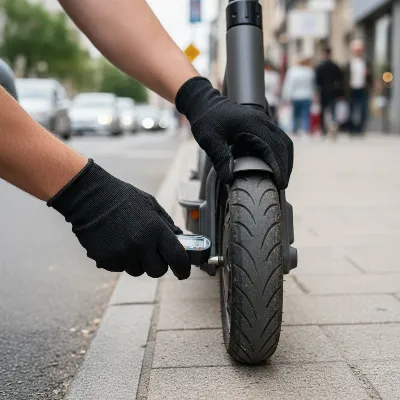 A rider performing a daily pre-ride check on their electric scooter, inspecting tires and brakes with a focus on safety and readiness
Battery Care: Extending Your Electric Scooter’s Lifespan
The battery is the heart of your electric scooter, and its proper care is paramount for maximizing range and overall lifespan. Lithium-ion batteries, commonly found in scooters, require specific attention to thrive.
Charging Habits: Optimizing Battery Performance
To maximize battery life and maintain efficiency, adopt smart charging habits. Avoid letting your battery completely discharge; aim to recharge it when the power level drops to around 20-30%. Similarly, avoid overcharging by unplugging the scooter once it reaches full capacity. Always use the original or manufacturer-recommended charger to ensure safe and effective charging. Allowing the scooter to cool down after a ride before plugging it in also contributes to battery health. For modern batteries, “conditioning” (full charge/discharge cycles) is generally not required for the first use.
Storage Conditions: Protecting Your Power Source
Proper storage is crucial for preserving your electric scooter’s battery life, especially during extended periods of inactivity. Store your scooter in a cool, dry place, away from direct sunlight and extreme temperatures (both hot and cold). For long-term storage, such as over winter, ensure the battery is charged to approximately 50-70% capacity. Extreme temperatures can significantly impact battery performance and longevity, leading to degradation.
Tire Maintenance for Optimal Performance and Safety
|
Our Picks for the Best Electric Scooter in 2026
As an Amazon Associate I earn from qualifying purchases.
|
||
| Num | Product | Action |
|---|---|---|
| 1 | ZIFFY Scooter for Kids with Hand Brake, Foldable Kick Scooter for Ages 6-12, Lightweight Scooter for Boys with 4 Adjustable Heights, ABEC9 Bearings, Supports Up to 260 lbs by Jova |

|
| 2 | Aero Big Wheels Kick Scooter for Kids 6+, Teens & Adults | Light Up Wheels, Hand Brake, Rubber Deck Mat & Shock Absorption | Foldable & Height Adjustable |
|
| 3 | Electric Scooter for Adults Kukirin G4/G2/G2max, 60V2000W Motor Fast Scooter 43MPH&47 Miles Range, 11 Inch Off-Road Tire Long Range Electric Scooter for Adults |
|
| 4 | JBM Adult & Kid Skating Protective Gear Set for Beginner to Advanced, Skateboard Helmet Knee and Elbow Pads with Wrist Guards for Inline Roller Skating, Scooter, Skateboarding |
|
| 5 | Scooters for Kids 8-12, Teens & Adults - Foldable Commuter Scooter with Bell, Hand Brake & Adjustable Height, 220 LB Weight Capacity, Perfect for School, Campus, Park Rides |
|
| 6 | Aero Big Wheels Kick Scooter for Kids 6+, Teens & Adults | Light Up Wheels, Hand Brake, Rubber Deck Mat & Shock Absorption | Foldable & Height Adjustable |
|
| 7 | Electric Scooter for Adults, Up to 19/23/25Miles, Built in Side/Turn Light, 8.5/10" Honeycomb Solid Tires, Folding E-Scooter with Front/Dual Suspension |
|
| 8 | Off Road Electric Scooter for Adult, 48V 13AH Folding E-Scooters, 800W Motor up to 25Mph & 28Miles Range,10" All Terrain Tire Scooter with Dual Suspension & Turn Signal Light |
|
| 9 | Caroma Peak 800W/1200W Electric Scooter with Seat, Max 15/20/30Miles&20MPH, 14"/20" Tires Foldable Adult Electric Scooter with Basket for Pets & Cargo, Dual Shock Absorbing EScooter for Commuting |
|
| 10 | isinwheel GT1/GT2 Electric Scooter Adults, 28 MPH Top Speed, 28/37Miles Range, 800/1000W Motor, 330LBS Load, Off-Road Scooter for Adults with Turn Signal (2025 Upgraded Version) |
|
Your scooter’s tires are your direct connection to the road, profoundly impacting ride quality, battery efficiency, and safety. Neglecting tire care can lead to reduced stability, decreased range, and an increased risk of punctures.
Tire Pressure: The Key to a Smooth Ride
Regularly checking and maintaining the correct tire pressure is one of the most vital maintenance tasks. Underinflated tires can lead to increased rolling resistance, reducing battery efficiency and making the ride feel sluggish. Conversely, overinflated tires can result in a harsh, uncomfortable ride and compromised grip. Always refer to your scooter’s manual or the tire sidewall for the manufacturer’s recommended PSI (pounds per square inch). Use a reliable pressure gauge, and check the pressure when the tires are cold, as temperature fluctuations can affect readings. Adjusting pressure based on rider weight and terrain can also enhance the riding experience.
Tread Wear and Puncture Prevention: Keeping Your Grip
Inspect your tires regularly for signs of excessive wear, cuts, cracks, or embedded debris. Worn-out tires can lose air faster and offer reduced traction, especially on wet or uneven surfaces. Depending on your scooter, you might have pneumatic (air-filled) or solid tires. Pneumatic tires offer better shock absorption and a smoother ride but are susceptible to punctures. Consider using tire sealant for pneumatic tires to prevent small flats. Solid tires, on the other hand, are virtually maintenance-free and puncture-resistant but may offer a less cushioned ride.
Ensuring Brake System Reliability
Reliable brakes are non-negotiable for safe electric scooter operation. Different scooters employ various braking systems, including mechanical disc, hydraulic disc, drum, and electronic regenerative brakes, each requiring specific maintenance considerations.
Brake Lever and Cable Inspection: Checking for Responsiveness
Regularly check your brake levers for proper tension and responsiveness. If a lever feels too loose or touches the handlebar when fully squeezed, it indicates a need for adjustment. For mechanical brakes, inspect the brake cables for fraying, rust, or damage, ensuring they move freely without sticking. Proper cable tension is crucial for effective braking.
Brake Pad and Rotor Checks: Stopping Power When You Need It
For disc brakes, visually inspect the brake pads and rotors for wear. Brake pads typically need replacement when their thickness wears down to less than 1mm-2mm. Look for any signs of damage or uneven wear on the brake discs. Squeaking or grinding noises during braking often signal worn pads or misalignment. For drum brakes, adjustments usually involve a nut near the wheel hub to increase cable tension. Regularly clean brake surfaces to prevent dirt buildup that can impair performance.
Keeping Your Electric Scooter Clean and Protected
A clean scooter isn’t just aesthetically pleasing; it’s a vital part of preventative maintenance that protects components from dirt, grime, and environmental damage.
Cleaning Techniques: Safe and Effective Care
Regular cleaning prevents the buildup of dirt and debris, which can affect performance and accelerate wear. Use a soft cloth or sponge with a mild soap solution for the exterior, avoiding harsh chemicals. Crucially, never use excessive water or high-pressure cleaners directly on electrical components, the charging port, or the display screen, as this can cause severe damage. Always power down your scooter and unplug any charging cables before cleaning. If your scooter has a removable battery, remove it. For stubborn grime, especially around joints and corners, a soft brush like an old toothbrush can be effective. After washing, dry your scooter thoroughly with a clean, dry cloth.
Weather Protection: Guarding Against the Elements
Protecting your scooter from the elements is essential. Store it in a dry, cool place away from direct sunlight and moisture when not in use. While many modern scooters offer some water resistance, most are not fully waterproof. Avoid riding in heavy rain or through deep puddles, as water ingress can damage internal circuitry, corrode battery terminals, and short out electronics. If you ride in wet conditions, immediately wipe down your scooter afterward, paying attention to metal parts that could rust, and lubricate moving components. Avoid charging a wet scooter immediately.
Fasteners and Moving Parts Inspection
Vibrations and regular use can cause bolts and fasteners to loosen over time, leading to instability and potential safety issues.
Tightening Loose Bolts: Securing Your Ride
Regularly check all nuts, bolts, and screws, especially on critical areas like the handlebars, stem, folding mechanism, and wheel hubs. Use appropriate Allen wrenches or an adjustable wrench to tighten any loose fasteners according to the manufacturer’s recommendations. Applying a small amount of thread locker (like Loctite) to critical bolts can prevent them from vibrating loose again.
Lubrication: Ensuring Smooth Operation
Moving parts, such as the folding mechanism, suspension components (if applicable), and even brake lever pivots, benefit from occasional lubrication. Use a silicone-based lubricant or a suitable chain oil for chains (if present) to reduce friction, prevent rust, and ensure smooth operation. Crucially, never apply lubricant to braking surfaces or tire treads.
When to Seek Professional Electric Scooter Service
While many maintenance tasks can be handled at home, some issues require the expertise of a professional technician. Knowing when to seek professional help can prevent further damage and ensure your scooter is safely repaired.
If you notice unusual noises coming from the motor or wheels, persistent braking issues that you can’t resolve, significant battery degradation despite proper care, or any complex electrical problems, it’s best to consult a certified electric scooter service center. Professionals have the specialized tools and knowledge to diagnose and fix issues safely and effectively. Regular professional check-ups, even annually, can also help identify potential problems early.
Common Electric Scooter Problems and Simple Fixes
Even with regular maintenance, electric scooters can sometimes develop issues. Many common problems have straightforward DIY solutions.
- Battery Won’t Charge / Drains Too Fast: Ensure the charger is working and connections are secure. If the battery is old or consistently drains quickly, it may be nearing the end of its life and require replacement. Store and charge at moderate temperatures.
- Scooter Won’t Turn On: Check if the power switch is functioning, inspect for loose wires, or check if a fuse has blown.
- Squeaky Brakes: Often indicates worn brake pads, misalignment, or dirt on the braking surface. Clean the brakes, inspect pads, and adjust calipers if needed.
- Flat Tires: For pneumatic tires, check for punctures and repair or replace the inner tube. Maintain correct tire pressure to prevent flats. Solid tires are puncture-resistant.
- Loose Handlebars/Stem: Tighten all bolts and fasteners around the handlebars and stem. Vibrations can cause these to loosen over time.
- Motor Not Working / Slow Speed: Check wiring connections to the motor and controller. Ensure the battery is adequately charged. Sometimes, accumulated dirt in the motor housing can affect performance and can be blown out with compressed air.
These simple troubleshooting steps can often get you back on the road quickly.
Conclusion
Embracing the world of electric scooters means enjoying unparalleled convenience and eco-friendly travel. However, the key to a lasting, reliable, and safe experience lies in consistent, proactive maintenance. By integrating routine checks, diligent battery care, meticulous tire and brake maintenance, regular cleaning, and awareness of when to seek professional help, you improve your electric scooter from a mere mode of transport into a dependable companion. Your commitment to these essential maintenance tips will not only significantly extend your scooter’s lifespan and enhance its performance but also ensure every journey is as smooth and secure as your first. What will be the first maintenance task you tackle to optimize your ride?
Frequently Asked Questions
How often should I check my electric scooter tires?
You should check your electric scooter’s tire pressure at least once a week, or before every ride if you ride frequently. Tires naturally lose air over time, and maintaining correct pressure is crucial for safety, performance, and battery efficiency.
Can I ride my electric scooter in the rain?
Most electric scooters have some degree of water resistance (often indicated by an IP rating), making them suitable for light rain or splashes. However, they are generally not fully waterproof. Avoid heavy rain, deep puddles, or submerging the scooter, as water can damage electrical components. Always dry your scooter thoroughly after riding in wet conditions.
What is the best way to store my electric scooter battery for a long time?
For long-term storage, keep your electric scooter battery charged to about 50-70% capacity. Store the scooter in a cool, dry place away from direct sunlight and extreme temperatures (below 0°C or above 30°C). This helps prevent battery degradation and preserves its lifespan.
How do I know if my electric scooter brakes need to be adjusted or replaced?
Signs that your brakes need attention include squeaking or grinding noises, a brake lever that feels too loose or touches the handlebar when fully squeezed, a noticeable decrease in stopping power, or uneven braking. Inspect brake pads for wear (replace if less than 1-2mm thick) and check cables for tension and damage.
Should I lubricate any parts of my electric scooter?
Yes, certain moving parts like the folding mechanism, suspension components, and brake lever pivots can benefit from occasional lubrication with a silicone-based lubricant. If your scooter has a chain, use a suitable chain oil. However, it is critically important never to apply lubricant to the braking surfaces (pads or rotors) or tire treads, as this will severely impair braking ability.
How often should I clean my electric scooter?
Regular cleaning is recommended, especially after riding in dusty, dirty, or wet conditions. Aim for a quick wipe-down every few days or after every ride. A more thorough cleaning with mild soap and water should be done every couple of weeks or monthly, ensuring you avoid electrical components with excessive water and dry the scooter completely.
Frequently Asked Questions
How often should I check my electric scooter tires?
You should check your electric scooter's tire pressure at least once a week, or before every ride if you ride frequently. Tires naturally lose air over time, and maintaining correct pressure is crucial for safety, performance, and battery efficiency.
Can I ride my electric scooter in the rain?
Most electric scooters have some degree of water resistance (often indicated by an IP rating), making them suitable for light rain or splashes. However, they are generally not fully waterproof. Avoid heavy rain, deep puddles, or submerging the scooter, as water can damage electrical components. Always dry your scooter thoroughly after riding in wet conditions.
What is the best way to store my electric scooter battery for a long time?
For long-term storage, keep your electric scooter battery charged to about 50-70% capacity. Store the scooter in a cool, dry place away from direct sunlight and extreme temperatures (below 0u00b0C or above 30u00b0C). This helps prevent battery degradation and preserves its lifespan.
How do I know if my electric scooter brakes need to be adjusted or replaced?
Signs that your brakes need attention include squeaking or grinding noises, a brake lever that feels too loose or touches the handlebar when fully squeezed, a noticeable decrease in stopping power, or uneven braking. Inspect brake pads for wear (replace if less than 1-2mm thick) and check cables for tension and damage.
Should I lubricate any parts of my electric scooter?
Yes, certain moving parts like the folding mechanism, suspension components, and brake lever pivots can benefit from occasional lubrication with a silicone-based lubricant. If your scooter has a chain, use a suitable chain oil. However, it is critically important never to apply lubricant to the braking surfaces (pads or rotors) or tire treads, as this will severely impair braking ability.
How often should I clean my electric scooter?
Regular cleaning is recommended, especially after riding in dusty, dirty, or wet conditions. Aim for a quick wipe-down every few days or after every ride. A more thorough cleaning with mild soap and water should be done every couple of weeks or monthly, ensuring you avoid electrical components with excessive water and dry the scooter completely.
Maintain Your Electric Scooter for Optimal Performance
Follow these steps to perform essential maintenance on your electric scooter, ensuring its longevity, safety, and smooth operation.
Before each ride, visually inspect tires for wear or punctures, test brakes for smooth engagement, and confirm all lights and indicators are working. Check for any loose bolts or fasteners on the handlebars, stem, and wheels to prevent wobbles.
Recharge your battery when it drops to 20-30% and unplug it once fully charged to prevent overcharging. For long-term storage, charge the battery to 50-70% and store the scooter in a cool, dry place away from extreme temperatures.
Check tire pressure weekly with a reliable gauge, referring to your scooter's manual for the recommended PSI. Regularly inspect tires for excessive wear, cuts, or embedded debris, and consider tire sealant for pneumatic tires to prevent flats.
Regularly check brake levers for responsiveness and inspect cables for damage. For disc brakes, check pads and rotors for wear, replacing pads if they are less than 1-2mm thick. Clean brake surfaces to prevent dirt buildup.
Clean your scooter regularly with a soft cloth and mild soap, avoiding excessive water on electrical components. Store it in a dry, cool place and avoid riding in heavy rain to prevent water damage to internal circuitry.

I’ve been riding my scooter for commuting to work for about a year now, and these tips are spot on. I used to just charge it whenever, but focusing on proper battery care has really made a difference in my range. It’s great to have a clear guide on what to check daily to keep things running smoothly.
The advice on tire and brake maintenance is really helpful, especially for someone like me who rides on some rougher city streets. My only minor complaint is that I wish there was a bit more detail on specific tools needed for some of the brake adjustments. Still, it’s a good starting point for keeping my scooter safe.
Knowing when to seek professional help is a big one for me. I’m pretty handy, but some of the more intricate mechanisms are beyond my comfort zone. It’s good to have that reminder that sometimes it’s better to let an expert handle it rather than risk further damage or costly repairs down the line.
I appreciate the emphasis on regular cleaning. I used to just wipe down the visible parts, but getting into the habit of a more meticulous clean, especially after riding in the rain, has prevented some gunk buildup around the motor. It definitely helps with the overall longevity and keeps it looking good.