To safely make your electric scooter go faster, focus on optimizing battery voltage, adjusting the motor controller, upgrading the motor, reducing rolling resistance, and improving aerodynamics. For example, upgrading from a 36V battery to a 48V or 52V unit can boost speed by 15-30%, provided the motor and controller are compatible. Always prioritize safety gear and adhere to local speed regulations to avoid legal issues and ensure a secure riding experience.
Understanding Electric Scooter Speed Mechanics
Before diving into modifications, it’s essential to grasp what dictates your electric scooter’s current speed. Several core components work in unison to propel you forward, and understanding their roles is key to any successful modification. Your scooter’s top speed is primarily influenced by its motor power, battery voltage, and the settings programmed into its electronic controller. External factors such as rider weight, tire type, terrain, and even atmospheric conditions also play a significant part in the real-world speed you experience.
Many electric scooters come with pre-set speed limitations, often hard-wired or embedded in the firmware, to comply with legal speed regulations and ensure rider safety. These restrictions act as a governor, preventing the scooter from utilizing its full inherent power. Identifying these limitations is the first step in responsibly modifying your ride for increased speed.
DIY Methods to Safely Increase Electric Scooter Speed
Enhancing your electric scooter’s speed involves a combination of adjustments and potential upgrades to its core components. While the allure of more speed is strong, always prioritize safety and compatibility during any modification.
Optimizing Battery Performance
The battery is the powerhouse of your electric scooter, directly impacting its speed and range.
The most impactful battery modification for speed is increasing its voltage. Upgrading from a common 36V battery to a 48V or even 52V unit can result in a significant speed boost, often by 15-30%. However, this critical upgrade must be done with extreme caution. Your scooter’s motor and controller must be fully compatible with the higher voltage; otherwise, you risk severe damage to the electronics or even a fire hazard. It’s not about the physical size of the battery, but its voltage output that drives speed.
While higher Amp-hour (Ah) ratings primarily increase range, a battery with a higher C-rating (discharge rate) can deliver more stable and consistent power to the motor, leading to better sustained performance under load. Simple maintenance, like keeping your battery charge above 80% and avoiding continuous overcharging, also contributes to overall battery health and sustained performance.
Adjusting the Motor Controller
|
Our Picks for the Best Electric Scooter in 2026
As an Amazon Associate I earn from qualifying purchases.
|
||
| Num | Product | Action |
|---|---|---|
| 1 | Scooters for Kids 8-12, Teens & Adults - Foldable Commuter Scooter with Bell, Hand Brake & Adjustable Height, 220 LB Weight Capacity, Perfect for School, Campus, Park Rides |

|
| 2 | Off Road Electric Scooter for Adult, 48V 13AH Folding E-Scooters, 800W Motor up to 25Mph & 28Miles Range,10" All Terrain Tire Scooter with Dual Suspension & Turn Signal Light |
|
| 3 | Aero Big Wheels Kick Scooter for Kids 6+, Teens & Adults | Light Up Wheels, Hand Brake, Rubber Deck Mat & Shock Absorption | Foldable & Height Adjustable |
|
| 4 | JBM Adult & Kid Skating Protective Gear Set for Beginner to Advanced, Skateboard Helmet Knee and Elbow Pads with Wrist Guards for Inline Roller Skating, Scooter, Skateboarding |
|
| 5 | Caroma Peak 800W/1200W Electric Scooter with Seat, Max 15/20/30Miles&20MPH, 14"/20" Tires Foldable Adult Electric Scooter with Basket for Pets & Cargo, Dual Shock Absorbing EScooter for Commuting |
|
| 6 | Electric Scooter for Adults, Up to 19/23/25Miles, Built in Side/Turn Light, 8.5/10" Honeycomb Solid Tires, Folding E-Scooter with Front/Dual Suspension |
|
| 7 | isinwheel GT1/GT2 Electric Scooter Adults, 28 MPH Top Speed, 28/37Miles Range, 800/1000W Motor, 330LBS Load, Off-Road Scooter for Adults with Turn Signal (2025 Upgraded Version) |
|
| 8 | Aero Big Wheels Kick Scooter for Kids 6+, Teens & Adults | Light Up Wheels, Hand Brake, Rubber Deck Mat & Shock Absorption | Foldable & Height Adjustable |
|
| 9 | ZIFFY Scooter for Kids with Hand Brake, Foldable Kick Scooter for Ages 6-12, Lightweight Scooter for Boys with 4 Adjustable Heights, ABEC9 Bearings, Supports Up to 260 lbs by Jova |
|
| 10 | Electric Scooter for Adults Kukirin G4/G2/G2max, 60V2000W Motor Fast Scooter 43MPH&47 Miles Range, 11 Inch Off-Road Tire Long Range Electric Scooter for Adults |
|
The electronic speed controller (ESC) acts as the brain of your scooter, managing power delivery from the battery to the motor. Often, this component houses the factory-set speed limiters.
Many modern scooters allow for firmware modifications via dedicated apps or diagnostic tools. By reprogramming the controller’s firmware, you can remove or adjust these pre-set speed restrictions, unlocking the motor’s full potential. For those seeking a more substantial upgrade, replacing the stock controller with a higher-performance aftermarket unit that boasts a higher amp rating can significantly boost both speed and acceleration.
It is crucial to understand that modifying the controller can void your scooter’s warranty and, if done improperly, may cause premature wear to the motor or battery. Ensure any new controller is compatible with your existing motor and battery to prevent damage, especially if the new controller is capable of drawing more current than your battery can safely supply.
Motor Upgrades and Enhancements
The motor is where electrical energy transforms into kinetic motion. A higher wattage motor naturally provides more power, directly translating to increased speed and better acceleration.
Consider replacing your existing motor with a higher wattage version, for example, moving from a 250W to a 500W or even 1000W motor, for a noticeable difference in performance. This upgrade often requires a compatible controller and battery to handle the increased power demand. Some advanced enthusiasts also explore motor winding modifications to alter the motor’s Kv rating, which affects revolutions per minute per volt, ultimately influencing top speed.
Reducing Rolling Resistance
Reducing friction is one of the simplest yet most effective ways to gain speed without altering electronics.
Maintaining optimal tire pressure is paramount. Underinflated tires create a larger contact patch with the ground, increasing rolling resistance and making your scooter feel sluggish. Most electric scooter tires require between 35-55 PSI, depending on the model and rider weight. Regularly checking and adjusting your tire pressure can immediately yield a few extra miles per hour. Switching from knobby off-road tires to smoother road-specific tires can also significantly reduce rolling resistance, as can opting for high-performance or airless tires if your model allows.
Proper lubrication of all moving parts, such as wheel bearings and chain drives (if applicable), minimizes friction, allowing the motor to work more efficiently and transfer power more effectively to the wheels.
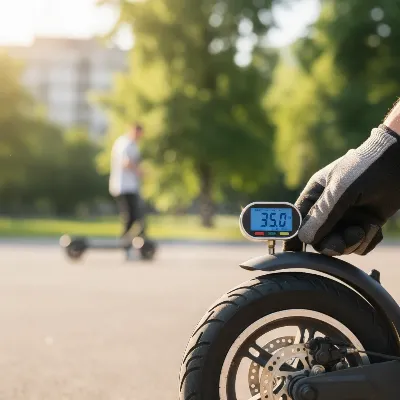 Checking electric scooter tire pressure with a gauge to ensure optimal performance and speed.
Weight Reduction Strategies
Every extra pound your scooter carries requires more energy from the motor, reducing overall speed and acceleration.
One of the most cost-effective ways to increase speed is to simply reduce the load. This means removing unnecessary accessories, carrying lighter bags, and if feasible, reducing your own carrying weight. For dedicated modifiers, replacing heavier stock components with lighter aftermarket alternatives, such as handlebars or deck panels made from composite materials, can also contribute to a faster ride.
Aerodynamic Improvements
The battle against air resistance becomes more significant at higher speeds. Improving your scooter’s aerodynamics can make a tangible difference.
Your riding posture is a major factor. By leaning slightly forward, tucking in your elbows, and maintaining a compact body position, you present a smaller profile to the wind, drastically reducing drag. For more advanced modifications, some riders consider adding small fairings or streamlining existing components to better manage airflow around the scooter. A more aerodynamic design means less energy is wasted fighting the wind, allowing more power to propel the scooter forward.
Gearing Modifications
For electric scooters that utilize a chain or belt drive system, altering the gear ratio can be an option to trade acceleration for higher top speed, or vice-versa.
By increasing the number of teeth on the motor gear relative to the wheel gear, you can achieve a higher maximum speed. Conversely, fewer teeth on the motor gear would offer quicker acceleration. This modification requires careful balancing and understanding of how it affects the scooter’s overall performance characteristics. It’s a more niche modification, often found on models with exposed drivetrains.
Essential Tools and Safety Gear for DIY Modifications
Attempting DIY modifications requires a basic set of tools and, more importantly, an unwavering commitment to safety. You will likely need:
- Multimeter: Essential for checking battery voltage, controller output, and component continuity.
- Hex Key / Allen Wrench Set: For accessing various bolts and screws.
- Screwdriver Set: Phillips and flathead for different fasteners.
- Tire Pump with Gauge: Crucial for maintaining optimal tire pressure.
- Wire Strippers and Crimpers: For electrical modifications (if applicable).
- Soldering Iron: For advanced electrical work (e.g., shunt modification, component replacement).
- Zip Ties, Electrical Tape: For securing wiring and components.
Beyond tools, personal safety gear is non-negotiable, especially when increasing speeds:
- Full-face Helmet: Absolutely essential, particularly if your scooter is capable of speeds above 20 mph.
- Protective Pads: For knees and elbows, to mitigate injury in case of a fall.
- Gloves: To protect hands and improve grip.
- Enhanced Lighting: Upgraded headlights, tail lights, and possibly turn signals for better visibility at higher speeds.
- Upgraded Braking Systems: Crucial to match increased speed with adequate stopping power. A faster scooter demands stronger brakes.
Legal and Warranty Implications of Speed Modifications
Before undertaking any modifications, it is imperative to be aware of the potential legal and warranty consequences.
Most regions have strict laws regarding the maximum speed of electric scooters allowed on public roads or pathways. Exceeding these limits can result in significant fines, confiscation of your scooter, or other legal repercussions. For example, many cities cap speeds at 15-20 mph. Always research and understand your local regulations.
Any unauthorized modification to your electric scooter’s components, especially those affecting performance, will almost certainly void its manufacturer’s warranty. This means any subsequent issues, even unrelated to your modifications, may not be covered for repair or replacement.
> “While boosting your scooter’s speed is exhilarating, that with great speed comes great responsibility. Always prioritize robust safety gear and confirm local regulations before you hit the throttle.” – Alex “ScooterTech” Chen, Electric Vehicle Specialist.
Top Tips for Maintaining Performance After Modification
Once you’ve safely upgraded your electric scooter for more speed, ongoing maintenance is crucial to sustain its performance and longevity.
Regularly clean your scooter, paying attention to areas where dirt and debris can accumulate, such as around the motor and wheels. Lubricate moving parts, especially if your scooter has a chain or belt drive, to reduce friction. Frequently check the bearings of your wheels for smooth operation. For electrical components, consider using electrical contact cleaner and dielectric grease to prevent corrosion and ensure optimal conductivity. Periodically inspect all wiring for wear or damage.
Proper battery care remains vital. Avoid completely draining the battery and store your scooter in a cool, dry place when not in use. Regular checks of tire pressure should become a routine habit to ensure optimal rolling resistance and safety.
When to Seek Professional Help
While many modifications can be done DIY, some aspects of electric scooter enhancement are complex and best left to professionals.
If you are unsure about wiring diagrams, component compatibility (especially for battery and controller upgrades), or advanced firmware flashing, consulting a qualified electric vehicle technician is highly recommended. Incorrect electrical modifications can be dangerous, leading to short circuits, component failure, or even fire. Professionals can ensure that all components are correctly matched, safely installed, and perform optimally without compromising the scooter’s structural integrity or electrical system.
Conclusion
Making your electric scooter faster safely through DIY modifications is a rewarding endeavor that can significantly enhance your riding experience. By understanding the interplay of components like the motor, battery, and controller, and applying careful, informed modifications, you can unlock greater speed and performance. foundational elements like proper tire pressure, weight reduction, and an aerodynamic riding posture are just as important as advanced hardware upgrades. Always prioritize safety with appropriate gear and be mindful of local regulations and warranty implications.
Are you ready to improve your daily ride and experience the full potential of your electric scooter? The road to a faster, more thrilling journey awaits!
Frequently Asked Questions
Can increasing battery voltage damage my electric scooter?
Yes, increasing your electric scooter's battery voltage without ensuring full compatibility with its motor and controller can cause severe, irreversible damage. Components are designed for specific voltage ranges; exceeding this limit can instantly fry the electronics and poses a significant fire hazard.
What are the easiest ways to get more speed without major modifications?
The easiest and safest ways to increase your electric scooter's speed without complex modifications include maintaining optimal tire pressure (typically 35-55 PSI), reducing unnecessary weight, and adopting a more aerodynamic riding posture. These simple adjustments can often yield a noticeable increase in performance.
Will modifying my electric scooter's speed void its warranty?
In most cases, yes. Any unauthorized modifications to your electric scooter's internal components, especially those related to the motor, battery, or controller, are highly likely to void your manufacturer's warranty. This means future repairs, even for unrelated issues, may no longer be covered.
Is it legal to increase my electric scooter's speed?
The legality of increasing your electric scooter's speed varies widely by region and local regulations. Many areas have specific speed limits for electric scooters on public roads and pathways, often capped at 15-20 mph. Modifying your scooter to exceed these legal limits can result in fines or confiscation, so always check local laws.
How does rider weight affect electric scooter speed?
Rider weight has a direct and significant impact on electric scooter speed and acceleration. A heavier rider requires the motor to expend more energy to achieve and maintain speed, leading to slower acceleration and a lower top speed compared to a lighter rider on the same scooter. Reducing overall load is a simple way to boost performance.
Can custom firmware improve my scooter's speed safely?
Custom firmware can potentially improve your scooter's speed by removing factory-set speed limiters or optimizing power delivery. However, this is considered a higher-risk modification. If not done correctly, it can damage components or lead to unstable performance, so always source firmware from reputable developers and understand the risks involved.
How to Safely Increase Electric Scooter Speed
Learn how to safely modify your electric scooter to achieve higher speeds through battery, controller, and motor adjustments, along with maintenance tips.
Upgrade your battery from 36V to 48V or 52V for a 15-30% speed boost, ensuring compatibility with your motor and controller to prevent damage. Maintain battery health by keeping charge above 80% and avoiding overcharging.
Reprogram the electronic speed controller (ESC) firmware via dedicated apps to remove or adjust speed restrictions. Alternatively, replace the stock controller with a higher-performance aftermarket unit for significant speed and acceleration gains. Be aware that this may void your warranty.
Replace your existing motor with a higher wattage version, such as moving from 250W to 500W or 1000W, for a noticeable performance difference. Ensure the new motor is compatible with your controller and battery to handle increased power demands.
Maintain optimal tire pressure, typically between 35-55 PSI, to minimize friction and improve speed. Consider switching to smoother road-specific tires and regularly lubricate moving parts like wheel bearings to enhance efficiency.
Reduce the overall load by removing unnecessary accessories and carrying lighter bags. Improve aerodynamics by adopting a compact riding posture, leaning forward, and tucking in your elbows to reduce air resistance, especially at higher speeds.

The advice on reducing rolling resistance was super helpful. I swapped out my old tires for some higher-quality ones and noticed a definite improvement in my top speed and overall ride smoothness. It’s a simpler upgrade than messing with the motor, and I appreciate the focus on safety gear too.
I tried the tip about upgrading my battery from 36V to 48V, and wow, what a difference! My scooter feels like a whole new machine. It was a bit of an investment, but totally worth it for the extra speed and range. Just make sure your motor can handle it, like the post mentioned.
I was hoping to get more out of adjusting my motor controller, but it was a bit more complicated than I anticipated. I followed the steps carefully, but the speed boost wasn’t as dramatic as I’d hoped. Maybe my specific scooter model just isn’t as responsive to that kind of tweak. Still, some good info here.
Improving aerodynamics is something I never really considered, but it makes so much sense! I started paying more attention to my riding posture, and even small changes seem to make a difference, especially on longer stretches. It’s a free way to gain a little extra speed, which is awesome.