Replacing an electric scooter battery yourself is a straightforward process that can save time and money, typically taking about 30-60 minutes with basic tools. A degraded battery often causes reduced range or slower acceleration, but with the right approach and essential safety precautions, you can restore your scooter’s power and extend its lifespan. This guide covers identifying a failing battery, selecting a compatible replacement, and safely disposing of the old unit, ensuring a smooth DIY battery replacement.
Understanding When and Why to Replace Your Electric Scooter Battery
Recognizing the Signs of a Worn-Out Battery
Electric scooter batteries have a finite lifespan, degrading over time due to repeated charging cycles, temperature exposure, and general wear. You’ll notice several signs when your battery is nearing its end. Common indicators include a significant reduction in your scooter’s maximum range, slower acceleration, dimming headlights, a weak horn, or the scooter struggling to start or maintain power, even after a full charge. For a 12V battery, a multimeter reading around 12.0V or lower often indicates a battery on its last leg, compared to a healthy 12.6V or above.
The Importance of a Compatible Replacement Battery
Choosing the correct replacement battery is paramount for the safety and performance of your electric scooter. The new battery must match the original in terms of voltage (V), amp-hours (Ah), and chemistry. Most modern electric scooters use lithium-ion batteries, but some older models or mobility scooters might use Sealed Lead Acid (SLA) batteries. Using a battery with incorrect specifications can lead to poor performance, damage to your scooter’s electrical system, or even safety hazards. Always consult your scooter’s user manual or the existing battery’s label to ensure you purchase an exact or equivalent compatible replacement from a reputable supplier.
Essential Tools and Safety Gear for Battery Replacement
Before you begin any work on your electric scooter’s battery, proper preparation is critical. Gathering the right tools and, more importantly, prioritizing safety will help prevent accidents and ensure a successful replacement.
Required Tools for the Job
You won’t need an elaborate workshop for this task, but a few basic items are essential:
- Screwdriver Set: You’ll likely need Phillips and flathead screwdrivers, and possibly hex keys (Allen wrenches), depending on your scooter’s fasteners.
- A Compatible Replacement Battery: Ensure it matches your scooter’s specifications.
- Pliers or Wire Cutters: For disconnecting wires if they are not plug-and-play, or for cutting zip ties.
- Electrical Tape or Heat Shrink Tubing: To insulate any exposed wire connections securely.
- Petroleum Jelly (Optional): A small dab on terminals can help prevent corrosion, especially for lead-acid batteries.
- Brush and Clean Cloth: For cleaning the battery compartment if dirt or corrosion is present.
Crucial Safety Precautions
|
Our Picks for the Best Electric Scooter in 2026
As an Amazon Associate I earn from qualifying purchases.
|
||
| Num | Product | Action |
|---|---|---|
| 1 | Electric Scooter for Adults, Up to 19/23/25Miles, Built in Side/Turn Light, 8.5/10" Honeycomb Solid Tires, Folding E-Scooter with Front/Dual Suspension |

|
| 2 | Caroma Peak 800W/1200W Electric Scooter with Seat, Max 15/20/30Miles&20MPH, 14"/20" Tires Foldable Adult Electric Scooter with Basket for Pets & Cargo, Dual Shock Absorbing EScooter for Commuting |
|
| 3 | Off Road Electric Scooter for Adult, 48V 13AH Folding E-Scooters, 800W Motor up to 25Mph & 28Miles Range,10" All Terrain Tire Scooter with Dual Suspension & Turn Signal Light |
|
| 4 | Electric Scooter for Adults Kukirin G4/G2/G2max, 60V2000W Motor Fast Scooter 43MPH&47 Miles Range, 11 Inch Off-Road Tire Long Range Electric Scooter for Adults |
|
| 5 | Aero Big Wheels Kick Scooter for Kids 6+, Teens & Adults | Light Up Wheels, Hand Brake, Rubber Deck Mat & Shock Absorption | Foldable & Height Adjustable |
|
| 6 | Aero Big Wheels Kick Scooter for Kids 6+, Teens & Adults | Light Up Wheels, Hand Brake, Rubber Deck Mat & Shock Absorption | Foldable & Height Adjustable |
|
| 7 | ZIFFY Scooter for Kids with Hand Brake, Foldable Kick Scooter for Ages 6-12, Lightweight Scooter for Boys with 4 Adjustable Heights, ABEC9 Bearings, Supports Up to 260 lbs by Jova |
|
| 8 | isinwheel GT1/GT2 Electric Scooter Adults, 28 MPH Top Speed, 28/37Miles Range, 800/1000W Motor, 330LBS Load, Off-Road Scooter for Adults with Turn Signal (2025 Upgraded Version) |
|
| 9 | JBM Adult & Kid Skating Protective Gear Set for Beginner to Advanced, Skateboard Helmet Knee and Elbow Pads with Wrist Guards for Inline Roller Skating, Scooter, Skateboarding |
|
| 10 | Scooters for Kids 8-12, Teens & Adults - Foldable Commuter Scooter with Bell, Hand Brake & Adjustable Height, 220 LB Weight Capacity, Perfect for School, Campus, Park Rides |
|
Working with electric batteries carries inherent risks, so adhering to strict safety guidelines is non-negotiable.
> “Always work in a dry, well-ventilated area and avoid puncturing or damaging the battery. These simple steps can prevent serious incidents.”
- Power Off and Unplug: Always turn off your scooter and disconnect it from any power source before starting. This is your first and most vital safety step to prevent accidental shocks or short circuits.
- Wear Protective Gear: Insulated gloves and safety glasses are highly recommended to protect against potential sparks, chemical exposure, or other hazards.
- Stable Workspace: Place your scooter on a stable, level surface to prevent it from tipping over during the process.
- Avoid Short Circuits: Never allow metal tools to touch both battery terminals simultaneously. This can cause sparks, severe damage to the battery, or even a fire.
- Handle with Care: Batteries can be heavy. Lift them carefully to avoid dropping them or straining yourself.
- Do Not Force Connections: When disconnecting or reconnecting wires, use the designated plugs and avoid pulling directly on the wires, which can damage them.
- Know Your Limits: If your electric scooter has a fixed, high-capacity battery pack sealed inside the frame, do not attempt to replace it yourself. These systems involve delicate wiring and safety mechanisms best handled by a professional service center.
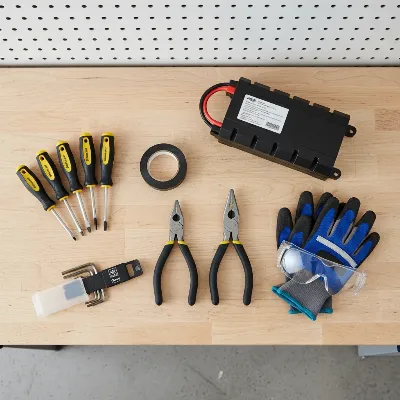 Essential tools and safety gear laid out for electric scooter battery replacement, including screwdrivers, gloves, and a new battery.
Step-by-Step Guide to Replacing Your Electric Scooter Battery
Replacing your electric scooter battery can be a rewarding DIY project if you follow each step carefully and prioritize safety.
Preparation and Accessing the Battery Compartment
Start by ensuring your scooter is turned off and unplugged from any charger. Gather all your tools and put on your safety gloves and glasses. Next, you need to locate the battery compartment. For most electric scooters, the battery is housed either under the deck (footboard) or within the main stem. If you’re unsure, consult your scooter’s user manual for the exact location. Once found, use the appropriate screwdriver (Phillips, flathead, or hex key) to carefully remove the screws securing the compartment cover. Gently lift the cover to expose the battery pack. Some models may have an additional locking mechanism that requires a key or specific tool to unlock before opening.
Safely Disconnecting and Removing the Old Battery
Before disconnecting, take a clear photo of the battery’s wiring setup with your phone. This will serve as a helpful reference when installing the new battery. When disconnecting the old battery, always remove the negative (black) terminal first, followed by the positive (red) terminal. This minimizes the risk of accidental short circuits. Disconnect any wiring harnesses by gently unplugging them; avoid pulling on the wires themselves. If the battery is secured with straps, brackets, or adhesive strips, unfasten or carefully remove them. Once all connections and restraints are clear, carefully lift the old battery out of its compartment, keeping it upright to prevent any potential leaks, especially if it’s a lead-acid type.
Installing the New Battery
With the old battery removed, take a moment to inspect the compartment. Clean any dirt, dust, or corrosion using a brush or a cloth lightly dampened with a baking soda solution (for corrosion) and ensure it’s completely dry before proceeding. Now, place the new battery into the compartment, ensuring it sits firmly and in the same orientation as the old one. Reattach any securing straps or brackets to hold it in place. When reconnecting the terminals, the sequence is reversed: attach the positive (red) terminal first, then the negative (black) terminal. Make sure all connections are snug but avoid overtightening the bolts. If needed, use electrical tape or heat shrink tubing to insulate any exposed wires, ensuring secure connections.
Testing and Reassembling Your Scooter
Before sealing everything up, it’s crucial to test the new battery. Power on your scooter to confirm that the battery is recognized and functioning correctly. Check if the lights, horn, and display (if applicable) respond strongly. If everything appears to be working as expected, power off the scooter again. Carefully replace the battery compartment cover, aligning it properly, and re-tighten all screws evenly. Do not over-tighten, as this can strip the threads or damage the casing. Once reassembled, it’s highly recommended to fully charge your new battery before your first ride to ensure optimal performance and initial calibration.
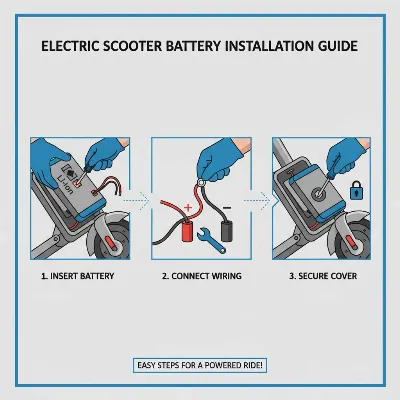 A clear illustration showing the step-by-step process of installing a new battery into an electric scooter's compartment.
Post-Replacement Care and Extending Battery Lifespan
Replacing your electric scooter battery is a significant step, but proper care afterward ensures you get the most out of your investment and extend its life.
Initial Charging and Usage Tips for Your New Battery
Once your new battery is installed and your scooter reassembled, the first step is to perform a full charge. While modern lithium-ion batteries don’t require “conditioning” like older battery technologies, a complete initial charge helps calibrate the battery management system. After this, try to avoid completely draining the battery during normal use. Regularly recharging your battery after every use, if possible, helps extend its overall lifespan. It’s also beneficial to disconnect the charger once the battery is full to prevent overcharging, which can degrade battery health over time.
General Maintenance to Prolong Battery Health
Even after replacement, ongoing maintenance is key to maximizing your battery’s lifespan and ensuring your scooter remains reliable. Store your electric scooter, and particularly its battery, in a cool, dry place away from direct sunlight and extreme temperatures (both hot and cold). Extreme temperatures can significantly impact battery performance and longevity. If you’re storing the scooter for an extended period, aim to keep the battery at around a 50-80% charge level, and check it monthly to ensure the voltage doesn’t drop too low, as this can lead to irreversible damage. Regularly inspect your battery for any signs of physical damage, swelling, leaks, or unusual odors, and address any issues promptly.
Responsible Disposal of Your Old Electric Scooter Battery
Properly disposing of your old electric scooter battery is just as important as the replacement process itself, safeguarding both the environment and public safety.
Why Proper Battery Disposal is Crucial
Electric scooter batteries are considered hazardous waste due to their chemical composition, often containing heavy metals like lead or volatile lithium compounds. Never throw old scooter batteries into your regular household trash or recycling bin. Improper disposal poses significant environmental risks, as toxic materials can leach into soil and water. Furthermore, crushed or punctured batteries in garbage trucks or landfills can short-circuit, leading to dangerous fires and even explosions. Local regulations almost universally mandate specific disposal methods for these types of batteries, making responsible recycling a legal requirement in many areas.
Where to Recycle Your Used Electric Scooter Battery
Finding the right place to recycle your old battery is simpler than you might think. Many local authorities offer dedicated municipal recycling centers or household hazardous waste (HHW) facilities that accept various battery types, including those from electric scooters. Auto parts stores often accept lead-acid batteries for recycling, and some large retailers that sell batteries also have take-back programs. Specialized battery recycling companies, such as Call2Recycle in North America, provide convenient drop-off locations, often found in retail stores. Before dropping off your battery, it’s a good practice to cover the terminals with electrical tape to prevent accidental short circuits during transport.
Conclusion
Replacing your electric scooter battery safely at home is an achievable task that restores performance and extends the life of your ride. By carefully following the step-by-step instructions, utilizing the correct tools, and rigorously adhering to safety precautions, you can confidently undertake this DIY project. Remember, the journey doesn’t end with installation; consistent battery maintenance and responsible disposal of the old unit are vital for both your scooter’s longevity and environmental well-being. Are you ready to take control of your electric scooter’s maintenance and enjoy countless more miles of seamless riding?
Frequently Asked Questions
How do I know if my electric scooter battery needs replacing?
You can tell your electric scooter battery needs replacing if you notice a significant reduction in range, slower acceleration, dimming lights, or if a 12V battery reads around 12.0V or lower with a multimeter. These are common indicators of a degraded battery nearing the end of its useful life.
What tools are essential for replacing an electric scooter battery?
Essential tools for replacing an electric scooter battery include a screwdriver set (Phillips, flathead, hex keys), pliers or wire cutters, electrical tape, and a compatible replacement battery. Safety gear like insulated gloves and safety glasses are also crucial for protection.
What are the most important safety precautions when changing a scooter battery?
The most important safety precautions when changing a scooter battery are to always power off and unplug the scooter, wear protective gear like insulated gloves and safety glasses, and avoid short circuits by never allowing metal tools to touch both battery terminals simultaneously. Work in a dry, well-ventilated area.
How should I properly dispose of an old electric scooter battery?
You should never throw old electric scooter batteries into household trash due to their hazardous chemical composition. Instead, take them to municipal recycling centers, household hazardous waste facilities, or specialized battery recycling programs like Call2Recycle. Cover the terminals with electrical tape before transport to prevent short circuits.
Can I replace a fixed, high-capacity electric scooter battery myself?
No, if your electric scooter has a fixed, high-capacity battery pack sealed inside the frame, you should not attempt to replace it yourself. These systems involve delicate wiring and safety mechanisms that are best handled by a professional service center to prevent damage or injury.
Replace Your Electric Scooter Battery Safely
Follow these steps to safely replace your electric scooter battery, restoring its performance and extending your scooter's life.
Ensure your scooter is off and unplugged. Gather all tools and put on safety gear. Locate the battery compartment, typically under the deck or in the stem, and use the appropriate screwdriver to remove the cover. Some models may require a key or specific tool to unlock.
Take a photo of the wiring for reference. Always remove the negative (black) terminal first, then the positive (red) terminal, to minimize short circuit risks. Disconnect any wiring harnesses and unfasten securing straps or brackets. Carefully lift the old battery out, keeping it upright.
Clean the battery compartment of any dirt or corrosion and ensure it's dry. Place the new battery firmly in the same orientation as the old one and reattach any securing straps. Reconnect terminals by attaching the positive (red) terminal first, then the negative (black) terminal. Insulate any exposed wires with electrical tape.
Before sealing, power on the scooter to test the new battery's function, checking lights, horn, and display. If working, power off the scooter. Carefully replace the compartment cover, aligning it properly, and re-tighten all screws evenly. Fully charge the new battery before your first ride for optimal performance.

The instructions for identifying a failing battery were spot on, I knew exactly what to look for. However, I found that the 30-60 minute estimate was a bit optimistic for me. It took me closer to 90 minutes to get everything done, mostly because I struggled with one of the screws. Still, it saved me a trip to the repair shop.
My acceleration had really slowed down lately, and I figured it was the battery. This guide walked me through selecting a compatible replacement without any issues. It’s great to have my scooter zipping around like it used to. Definitely a cost-effective way to extend the life of your ride.
I’ve been putting off replacing my battery because I thought it would be too complicated. This DIY approach was a game-changer! The safety precautions mentioned were very reassuring, and I felt confident throughout the whole process. My scooter’s power is fully restored, and I’m so glad I didn’t pay someone else to do it.
I was so nervous about replacing my scooter battery myself, but this guide made it super clear. My old battery was definitely showing signs of reduced range, and now my scooter feels brand new. The tips on safely disposing of the old unit were really helpful too. Highly recommend giving this a try if your battery is on its last legs!