The best lightweight electric scooters for college students typically weigh under 40 pounds (18 kg) and offer a real-world range of 15 to 25 miles (24-40 km) on a single charge. These scooters provide an efficient, eco-friendly, and convenient way for students to navigate bustling campuses, making daily commutes faster and less stressful. Key models like the TurboAnt M10 Lite, Hiboy Max3, Segway Ninebot Max, and Apollo Air Pro offer varying balances of portability, range, and features to suit diverse student needs and budgets.
Guide to Choosing the Right Electric Scooter for College Students
Selecting an electric scooter tailored for college life involves more than just picking the first model you see. It requires a thoughtful evaluation of features that align with student needs, prioritizing portability, safety, and reliability to ensure a smooth daily commute across campus.
Popular Types of Electric Scooters for Students
Electric scooters come in various designs, each offering distinct advantages. For college students, the most suitable types generally prioritize portability and ease of use over extreme power or off-road capabilities. For best electric scooter roundups on this site.
The most common and student-friendly type is the standard foldable commuter electric scooter. These models are designed for everyday urban use, offering a balance of speed, range, and a crucial folding mechanism that makes them easy to carry and store. Their compact size allows them to be tucked away under a desk, in a dorm room, or carried onto public transportation if needed. Some are specifically designed as ultra-lightweight models, often weighing under 30 pounds, making them ideal for students who frequently need to carry their scooter up stairs or across areas where riding isn’t permitted. While heavier, more robust scooters with advanced suspension exist, they are often overkill for campus terrain and can be cumbersome to manage in crowded student environments, making lighter, more nimble options preferable.
Key Criteria When Selecting an Electric Scooter
When embarking on your search for the ideal electric scooter, a few core specifications and features warrant close attention to ensure your chosen model truly enhances your college experience. Prioritizing these aspects will lead you to a practical and reliable companion for campus navigation.
Range and Battery Life
The scooter’s range determines how far you can travel on a single charge, a critical factor for college students. Most students will find an electric scooter with a real-world range of 15 to 25 miles (24-40 km) sufficient for daily campus commutes, including trips between classes, dorms, and local amenities. For larger campuses or those living off-campus, aiming for a model closer to the 25-mile mark or one with a swappable battery can provide extra peace of mind. Battery charging times typically vary from 4 to 8 hours for a full charge, so consider your schedule and access to charging points.
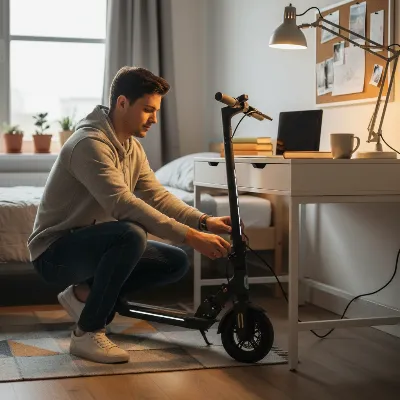 College student plugging in a lightweight electric scooter in a dorm room for charging
Maximum Speed
For campus environments, a moderate top speed is not only practical but also safer. An electric scooter with a maximum speed of 15 to 20 mph (25-30 km/h) is generally ideal for zipping across campus paths without posing unnecessary risks to pedestrians or yourself. It is also important to be aware of and comply with any specific speed limits or regulations that your university campus may enforce regarding personal electric vehicles.
Weight Capacity
Ensuring your electric scooter can safely support your weight and any items you carry is essential for both performance and longevity. Most lightweight electric scooters are designed to accommodate riders weighing up to 220-275 pounds (100-125 kg). Always check the manufacturer’s specified maximum load capacity, especially if you anticipate carrying a heavy backpack, textbooks, or occasional groceries, as exceeding this limit can impact the scooter’s speed, range, and overall structural integrity.
Material and Durability
The construction materials and overall build quality significantly affect an electric scooter’s durability and lifespan. Most reputable lightweight scooters feature frames made from aluminum alloy, known for its excellent strength-to-weight ratio, making the scooter robust yet portable. Look for models with an adequate IP (Ingress Protection) rating, such as IP54 or IPX6, which indicates resistance to dust and water splashes, crucial for handling unexpected rain showers or damp pathways on campus. A scooter built with quality components will save you from frequent repairs and provide a more reliable ride throughout your college years.
Braking System
A reliable braking system is paramount for safety, especially in busy campus environments where quick stops might be necessary. Electric scooters typically come with various braking options, including mechanical disc brakes, electronic (regenerative) brakes, or a combination. Disc brakes offer strong, responsive stopping power, while electronic brakes can help recharge the battery slightly during deceleration. Many quality scooters feature a dual braking system, combining two types for enhanced safety and control, providing confidence when navigating crowded pathways or uneven terrain.
Lighting System
Visibility is a key safety feature, particularly if you plan to ride your electric scooter during early mornings or late evenings. A good electric scooter should be equipped with a bright headlight to illuminate your path and a clear tail light to make you visible to others. Some advanced models also include turn signals, which are highly beneficial for indicating your intentions in traffic or on shared paths. Always ensure the lighting system is sufficient for your typical riding conditions and check if your campus or local regulations have specific requirements for scooter lighting.
Display Screen
A clear and intuitive display screen enhances the riding experience by providing essential information at a glance. Most electric scooters feature an LED or LCD screen that shows your current speed, battery level, distance traveled, and selected riding mode. A well-designed display is bright enough to read in various lighting conditions and is positioned conveniently on the handlebars, allowing you to monitor crucial data without diverting your attention too much from the path ahead.
Safety Features
Beyond robust brakes and adequate lighting, several additional safety features contribute to a secure riding experience. Always wearing a helmet is non-negotiable, regardless of how short the ride. Look for scooters with UL 2272 certification, which ensures the electrical system, including the battery, meets rigorous safety standards for charging, especially important for dorm room use. Some scooters offer anti-theft features like wheel locks or app-based GPS tracking, adding an extra layer of security. Always adhere to traffic laws, be mindful of pedestrians, and conduct regular checks of your scooter’s brakes, tires, and lights.
Comparing Popular Electric Scooter Models (Comparison Table)
|
Our Picks for the Best Electric Scooter in 2026
As an Amazon Associate I earn from qualifying purchases.
|
||
| Num | Product | Action |
|---|---|---|
| 1 | isinwheel GT1/GT2 Electric Scooter Adults, 28 MPH Top Speed, 28/37Miles Range, 800/1000W Motor, 330LBS Load, Off-Road Scooter for Adults with Turn Signal (2025 Upgraded Version) |

|
| 2 | Caroma Peak 800W/1200W Electric Scooter with Seat, Max 15/20/30Miles&20MPH, 14"/20" Tires Foldable Adult Electric Scooter with Basket for Pets & Cargo, Dual Shock Absorbing EScooter for Commuting |
|
| 3 | Scooters for Kids 8-12, Teens & Adults - Foldable Commuter Scooter with Bell, Hand Brake & Adjustable Height, 220 LB Weight Capacity, Perfect for School, Campus, Park Rides |
|
| 4 | Off Road Electric Scooter for Adult, 48V 13AH Folding E-Scooters, 800W Motor up to 25Mph & 28Miles Range,10" All Terrain Tire Scooter with Dual Suspension & Turn Signal Light |
|
| 5 | Aero Big Wheels Kick Scooter for Kids 6+, Teens & Adults | Light Up Wheels, Hand Brake, Rubber Deck Mat & Shock Absorption | Foldable & Height Adjustable |
|
| 6 | Aero Big Wheels Kick Scooter for Kids 6+, Teens & Adults | Light Up Wheels, Hand Brake, Rubber Deck Mat & Shock Absorption | Foldable & Height Adjustable |
|
| 7 | JBM Adult & Kid Skating Protective Gear Set for Beginner to Advanced, Skateboard Helmet Knee and Elbow Pads with Wrist Guards for Inline Roller Skating, Scooter, Skateboarding |
|
| 8 | Electric Scooter for Adults Kukirin G4/G2/G2max, 60V2000W Motor Fast Scooter 43MPH&47 Miles Range, 11 Inch Off-Road Tire Long Range Electric Scooter for Adults |
|
| 9 | Electric Scooter for Adults, Up to 19/23/25Miles, Built in Side/Turn Light, 8.5/10" Honeycomb Solid Tires, Folding E-Scooter with Front/Dual Suspension |
|
| 10 | ZIFFY Scooter for Kids with Hand Brake, Foldable Kick Scooter for Ages 6-12, Lightweight Scooter for Boys with 4 Adjustable Heights, ABEC9 Bearings, Supports Up to 260 lbs by Jova |
|
Choosing from the myriad of lightweight electric scooters can be daunting. Here’s a comparison of some popular models often recommended for college students, highlighting key features to help you make an informed decision.
| Feature | TurboAnt M10 Lite | Hiboy Max3 | Segway Ninebot Max | Apollo Air Pro |
|---|---|---|---|---|
| Weight | 31 lbs (14 kg) | 34 lbs (15.4 kg) | 42.1 lbs (19.1 kg) | 37 lbs (16.8 kg) |
| Max Speed | 16 mph (25 km/h) | 18.6 mph (30 km/h) | 18.6 mph (30 km/h) | 18.8 mph (30.2 km/h) |
| Real-world Range | 10 miles (16 km) | 16.7 miles (27 km) | 25-40 miles (40-64 km) | 17.7 miles (28.5 km) |
| Max Load | 220 lbs (100 kg) | 220 lbs (100 kg) | 220 lbs (100 kg) | 220 lbs (100 kg) |
| Motor Power | 350W | 350W | 350W | 350W |
| Tires | 8.5-inch Solid | 10-inch Pneumatic | 10-inch Pneumatic | 10-inch Pneumatic |
| Suspension | None | None | None | Front Suspension |
| Brakes | Dual (Electronic + Foot) | Dual (Disc + Electronic) | Dual (Electronic + Disc) | Dual (Disc + Regenerative) |
| Water Resistance | IP54 | IP54 | IPX5 | IP54 |
| Key Features | Ultra-light, budget-friendly, easy fold | Portable, durable, good value for money | Excellent range, robust build, highly reliable | Smooth ride, front suspension, good for varied terrain |
| Typical Price | $299 – $350 | $400 – $500 | $650 – $750 | $700 – $800 |
TurboAnt M10 Lite: An excellent choice for students on a tight budget who prioritize extreme portability. Its light weight and easy folding make it perfect for quick campus dashes and carrying into classrooms, though its range is limited to shorter commutes.Hiboy Max3: Offers a great balance of portability, decent range, and durability for its price point. It’s a reliable workhorse for daily campus use, providing solid performance without breaking the bank.Segway Ninebot Max: While slightly heavier, the Ninebot Max is a cult classic for its exceptional range and robust build quality, promising years of reliable service. It’s a fantastic investment for those who need a sturdy scooter for longer rides and don’t mind a few extra pounds.Apollo Air Pro: Stands out for its superior ride quality and handling, thanks to pneumatic tires and front suspension. It’s an intuitive scooter, great for new riders, and handles diverse campus terrains comfortably.
Where to Buy a Reliable Electric Scooter?
Finding a trustworthy seller for your electric scooter is just as important as choosing the right model. You have several options, each with its own advantages. Specialized electric scooter retailers, both online and brick-and-mortar, often provide the best selection, expert advice, and dedicated customer support. These stores typically carry a range of brands and models, allowing you to compare options effectively. Major electronics stores or department stores might also carry a limited selection, sometimes at competitive prices.
When purchasing online, always opt for reputable brand websites or well-known e-commerce platforms with strong buyer protection policies. Be sure to check the warranty terms, return policy, and availability of spare parts before making a purchase. It’s also advisable to thoroughly read customer reviews and testimonials to gauge the product’s reliability and the seller’s customer service.
Important Tips for Using an Electric Scooter
Using an electric scooter on campus or in urban areas comes with responsibilities to ensure your safety and the safety of others. Adhering to these guidelines will help you maximize your scooter’s benefits while minimizing risks.
Always make safety your top priority by wearing a helmet, even for short rides. Familiarize yourself with and obey all local traffic laws, including speed limits and right-of-way rules. Be especially mindful of pedestrians, giving them ample space and announcing your presence with a bell or horn. Regularly inspect your scooter before each ride, checking tire pressure, brake functionality, and light operation. Lastly, always secure your electric scooter with a robust lock when leaving it unattended, as campus theft can be more common than you might think.
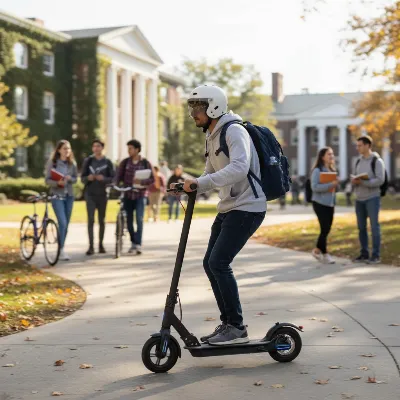 College student safely riding an electric scooter through a bustling university campus
Price Segments Of Electric Scooters
Electric scooters for college students typically fall into distinct price segments, each offering a different balance of features, performance, and build quality. Understanding these categories can help you align your budget with your expectations.
The budget-friendly segment (under $300-$400) includes reliable entry-level scooters, often characterized by basic features, shorter ranges (around 10-15 miles), and solid or smaller pneumatic tires. These are excellent for short, daily commutes on flat terrain. The mid-range segment ($400-$800) offers a significant upgrade in range (15-25+ miles), speed, and comfort, often including pneumatic tires and sometimes basic suspension. Scooters in this category provide a better balance of durability and features suitable for varied campus conditions. Finally, the premium segment ($800+) boasts advanced features like robust suspension, longer ranges (30+ miles), higher top speeds, superior build quality, and smart technology. While these offer the best performance and longevity, their weight might be a concern for some students.
Top Picks for College Electric Scooters
Based on a comprehensive evaluation of student needs, here are our top recommendations across different criteria for college electric scooters:
- Best for Budget & Ultra-Portability: TurboAnt M10 Lite. This scooter is an unbeatable choice for students who need an extremely lightweight and affordable option for short, quick trips around campus and easy carrying.
- Best All-Around Value: Hiboy Max3. Striking an excellent balance between cost, performance, and durability, the Hiboy Max3 offers a comfortable ride and sufficient range for most college students without a hefty price tag.
- Best for Range & Reliability: Segway Ninebot Max. If your budget allows for a slightly heavier but exceptionally robust scooter, the Ninebot Max’s impressive range and renowned durability make it a smart, long-term investment for extensive campus travel and beyond.
- Best for Ride Comfort & Varied Terrain: Apollo Air Pro. With its pneumatic tires and front suspension, the Apollo Air Pro delivers a remarkably smooth ride, making it ideal for campuses with less-than-perfect pathways or slight inclines, ensuring comfort for everyday use.
Electric Scooter Maintenance Guide
Proper maintenance is crucial for extending the life of your electric scooter and ensuring it operates safely and efficiently. Incorporating a few simple habits into your routine can prevent common issues and keep your scooter in top condition.
Start by performing regular checks on your scooter before each ride, focusing on tire pressure (if pneumatic), brake functionality, and light operation. Keep your scooter clean by wiping it down regularly with a damp cloth, especially after riding in wet or dusty conditions, to prevent dirt buildup from affecting moving parts. Charge the battery according to manufacturer guidelines, avoiding overcharging or completely draining it too often, which can prolong its lifespan. For more complex issues or annual tune-ups, consider taking your electric scooter to a specialized service center to ensure professional care and address any potential mechanical or electrical problems.
Conclusion
Choosing the best lightweight electric scooter for college kids is a decision that can profoundly impact your campus experience, transforming mundane commutes into enjoyable journeys. By prioritizing portability, understanding the importance of range and speed, and considering essential safety and durability features, you can confidently select a model that perfectly suits your academic lifestyle and budget. Whether you opt for an ultra-light budget model or a more robust, feature-rich scooter, the right electric companion offers unparalleled convenience, cost savings, and an eco-friendly way to navigate university life.
Frequently Asked Questions
What makes an electric scooter “lightweight” for college students?
For college students, a “lightweight” electric scooter typically weighs under 40 pounds (18 kg), making it easy to carry up stairs, into dorms, or on public transport. Models around 30-35 pounds are especially popular for their portability without compromising too much on features.
How much range do I need for a college electric scooter?
A good electric scooter for college should offer a real-world range of at least 15-25 miles (24-40 km) on a single charge. This is generally sufficient for daily trips between classes, dorms, and local spots, ensuring you don’t run out of battery mid-day.
Are electric scooters allowed on all college campuses?
No, policies vary widely by university. Before purchasing, it’s crucial to check your college’s specific rules regarding electric scooters, including permissible riding areas, speed limits, and storage regulations, to ensure compliance.
What are the most important safety features for a student electric scooter?
Key safety features include strong dual braking systems (e.g., disc and electronic), bright front and rear lights for visibility, pneumatic tires for better grip and shock absorption, and UL 2272 certification for safe battery charging in dorms. Always wear a helmet.
How much should a college student expect to spend on a good electric scooter?
Most college students find a reliable electric scooter within the $400-$800 price range. While budget options under $300 exist, spending a bit more often ensures better durability, range, and comfort features that are valuable for daily campus use.
Can I carry my electric scooter into class or a dorm room?
Many lightweight and foldable electric scooters are designed precisely for this purpose. Their compact folded dimensions allow them to be carried into classrooms or stored conveniently in a dorm room, under a desk, or in a locker.
How to Maintain Your Electric Scooter
Proper maintenance is crucial for extending the life of your electric scooter and ensuring it operates safely and efficiently. Incorporating a few simple habits into your routine can prevent common issues and keep your scooter in top condition.
Start by performing regular checks on your scooter before each ride. Focus on tire pressure (if pneumatic), brake functionality, and light operation to ensure everything is in working order.
Keep your scooter clean by wiping it down regularly with a damp cloth. This is especially important after riding in wet or dusty conditions to prevent dirt buildup from affecting moving parts.
Charge the battery according to manufacturer guidelines, avoiding overcharging or completely draining it too often. This practice can significantly prolong its lifespan and maintain battery health.
For more complex issues or annual tune-ups, consider taking your electric scooter to a specialized service center. Professional care can address any potential mechanical or electrical problems effectively.

I picked up the Segway Ninebot Max because everyone raves about its reliability. It’s definitely sturdy and feels safe, but at almost 40 pounds, it’s a bit heavier than I expected for a ‘lightweight’ option. Carrying it up stairs can be a bit of a workout. It gets the job done, but I wish it was a few pounds lighter for easier portability.
The Hiboy Max3 has been pretty solid for my daily commute across campus. I really appreciate how it handles the different terrains, even some of the slightly bumpy paths. My only minor complaint is that the battery life feels a little closer to the lower end of the 25-mile range when I’m really pushing it, especially on hills. Still, it’s a great scooter for the price.
The Apollo Air Pro is fantastic! I needed something with a good balance of features and portability, and this one delivers. The range is excellent, easily getting me through a full day of classes and errands without needing a recharge. It makes navigating my large university campus so much faster and more enjoyable. Best investment for college life, hands down.
I just got the TurboAnt M10 Lite for getting around campus and it’s been a game-changer. It’s super easy to carry up to my dorm room, which was a big concern for me since I’m on the third floor. The 15-mile range is perfect for my classes and quick trips to the library without worrying about charging constantly. Definitely recommend it for any student!