The shrill protest of squeaky brakes can quickly turn the joy of an electric scooter ride into an irritating ordeal. Beyond the annoyance, persistent brake noise often signals an underlying issue that demands attention, impacting both your safety and your scooter’s performance. Addressing these sounds promptly is crucial, transforming your ride from a jarring experience back to a smooth, silent glide. This guide offers a comprehensive, do-it-yourself approach to diagnose and silence those troublesome squeaks, ensuring your electric scooter remains a reliable and enjoyable companion for every journey.
Understanding Why Your Electric Scooter Brakes Squeak
Squeaking brakes are a common complaint among electric scooter owners, and for good reason—they’re not only loud but also indicate a problem that could compromise your stopping power. Understanding the root causes behind these noises is the first step toward a quick and effective fix.
Common Causes of Squeaky Brakes
Several factors can contribute to that distinct, high-pitched squeal. Often, it’s a combination of issues rather than a single culprit. Identifying the specific cause will help you apply the correct solution efficiently.
- Dust and Debris Buildup: The most frequent offender is the accumulation of dust, dirt, grime, or even oil on the brake pads and rotors. These foreign particles get trapped between the braking surfaces, creating friction and the characteristic squealing sound when the brakes are applied.
- Worn Brake Pads: Over time, brake pads naturally wear down. As they become thinner, their effectiveness diminishes, and the friction material can expose harder compounds or even the metal backing plate, leading to metal-on-metal contact and significant noise. Pads typically need replacement when they are less than 1/8-inch thick.
- Misaligned Brake Components: If the brake caliper or pads are not perfectly aligned with the rotor, they can rub unevenly against it. This misalignment causes inconsistent pressure, uneven wear, and a constant, annoying squeak or scrape, even when the brakes aren’t engaged.
- Moisture and Rust: Riding in wet conditions or prolonged exposure to humidity can introduce moisture into the braking system. This can lead to rust forming on metal components like the rotor, which in turn causes squeaking until the rust is worn off or cleaned.
- Glazed Brake Pads: Extreme heat from heavy or prolonged braking can “glaze” the surface of brake pads, hardening them and reducing their friction coefficient. Glazed pads become slick and less effective, often leading to squealing noises.
- Warped Brake Rotors: In some cases, the brake disc (rotor) itself can become slightly warped due to impact or heat. A warped rotor will rub against the brake pads at specific points as the wheel rotates, causing intermittent scraping or squeaking.
|
Our Picks for the Best Electric Scooter in 2026
As an Amazon Associate I earn from qualifying purchases.
|
||
| Num | Product | Action |
|---|---|---|
| 1 | Aero Big Wheels Kick Scooter for Kids 6+, Teens & Adults | Light Up Wheels, Hand Brake, Rubber Deck Mat & Shock Absorption | Foldable & Height Adjustable |

|
| 2 | Aero Big Wheels Kick Scooter for Kids 6+, Teens & Adults | Light Up Wheels, Hand Brake, Rubber Deck Mat & Shock Absorption | Foldable & Height Adjustable |
|
| 3 | Electric Scooter for Adults Kukirin G4/G2/G2max, 60V2000W Motor Fast Scooter 43MPH&47 Miles Range, 11 Inch Off-Road Tire Long Range Electric Scooter for Adults |
|
| 4 | Electric Scooter for Adults, Up to 19/23/25Miles, Built in Side/Turn Light, 8.5/10" Honeycomb Solid Tires, Folding E-Scooter with Front/Dual Suspension |
|
| 5 | Off Road Electric Scooter for Adult, 48V 13AH Folding E-Scooters, 800W Motor up to 25Mph & 28Miles Range,10" All Terrain Tire Scooter with Dual Suspension & Turn Signal Light |
|
| 6 | ZIFFY Scooter for Kids with Hand Brake, Foldable Kick Scooter for Ages 6-12, Lightweight Scooter for Boys with 4 Adjustable Heights, ABEC9 Bearings, Supports Up to 260 lbs by Jova |
|
| 7 | Caroma Peak 800W/1200W Electric Scooter with Seat, Max 15/20/30Miles&20MPH, 14"/20" Tires Foldable Adult Electric Scooter with Basket for Pets & Cargo, Dual Shock Absorbing EScooter for Commuting |
|
| 8 | isinwheel GT1/GT2 Electric Scooter Adults, 28 MPH Top Speed, 28/37Miles Range, 800/1000W Motor, 330LBS Load, Off-Road Scooter for Adults with Turn Signal (2025 Upgraded Version) |
|
| 9 | JBM Adult & Kid Skating Protective Gear Set for Beginner to Advanced, Skateboard Helmet Knee and Elbow Pads with Wrist Guards for Inline Roller Skating, Scooter, Skateboarding |
|
| 10 | Scooters for Kids 8-12, Teens & Adults - Foldable Commuter Scooter with Bell, Hand Brake & Adjustable Height, 220 LB Weight Capacity, Perfect for School, Campus, Park Rides |
|
Types of Electric Scooter Brakes
Electric scooters typically come equipped with one of three main types of braking systems. Knowing which one your scooter has is essential for proper diagnosis and repair.
- Drum Brakes: These are enclosed within the wheel hub, making them less susceptible to dirt and water but also harder to inspect and service. Drum brakes usually squeak when the internal brake material isn’t properly adjusted, causing it to rub against the motor or housing.
- Mechanical Disc Brakes: Common on many scooters, these systems use a cable to actuate a caliper that clamps down on a disc rotor. They offer strong stopping power and are generally straightforward to maintain, though they can be prone to squeaking if dirty or misaligned.
- Hydraulic Disc Brakes: Found on higher-end scooters, these brakes use fluid pressure rather than a cable to engage the pads. They provide superior modulation and stopping power but require a more complex bleeding process if air enters the hydraulic lines, which can lead to a “spongy” feel or inconsistent braking.
Step-by-Step DIY Guide to Fixing Squeaky Electric Scooter Brakes
Tackling squeaky brakes yourself is a rewarding task that can save you a trip to the repair shop. With a few basic tools and a bit of patience, you can restore your scooter’s silent stopping power.
Tools You’ll Need
Before you begin, gather these essential items to ensure a smooth repair process:
- Allen wrenches (hex keys)
- Adjustable wrench or spanner
- Screwdrivers (Phillips and flathead)
- Brake cleaner or isopropyl alcohol
- Clean rags or paper towels
- Gloves (optional, but recommended for cleaning)
- New brake pads (if replacement is necessary)
- Bleed kit and hydraulic brake fluid (only for hydraulic brakes, if needed)
Step 1: Inspect and Identify the Squeak Source
The first crucial step is to pinpoint which brake is making the noise. This helps you focus your efforts.
Start by riding your scooter slowly in a quiet area, listening carefully to determine if the squeak originates from the front or rear wheel, and if it occurs consistently or only when braking. Once identified, visually inspect the brake system. Look for obvious signs of wear on the brake pads, any debris lodged near the caliper or rotor, or signs of uneven contact. Spin the wheel freely to check for constant rubbing noises, which might indicate a misaligned caliper or a warped rotor.
Step 2: Clean Your Brake System Thoroughly
Dirt, grime, and oil are common culprits behind brake noise. A thorough cleaning can often resolve the issue without further intervention.
How to Clean Disc Brakes (Rotor and Pads)
For disc brakes, carefully remove the wheel if it makes cleaning easier. Spray the brake rotor generously with brake cleaner or isopropyl alcohol, then wipe it down with a clean, lint-free rag or paper towel. Repeat this process until the rag comes away clean. If possible, remove the brake pads from the caliper. Inspect them for embedded grit or a glazed surface. If glazed, you can lightly sand the pads with fine-grit sandpaper (around 120-180 grit) to expose a fresh friction surface, then clean them thoroughly with brake cleaner. Ensure pads are completely dry before reinstallation.
How to Clean Drum Brakes (General Approach)
Cleaning drum brakes is generally more involved as they are enclosed. If you suspect drum brakes are the cause, and you’re not comfortable disassembling the hub, it’s often best to seek professional help. However, sometimes external dirt can still cause issues; ensure the exterior of the drum housing is clean.
What Cleaning Agents to Use and What to Avoid
Always use specialized brake cleaner or isopropyl alcohol. These agents are designed to evaporate quickly without leaving residues that could affect braking performance. Absolutely avoid using strong chemical cleaners, lubricants like WD-40, or any oil-based products on your brake pads or rotors. These can contaminate the braking surfaces, severely reduce stopping power, and create more noise or even dangerous braking conditions.
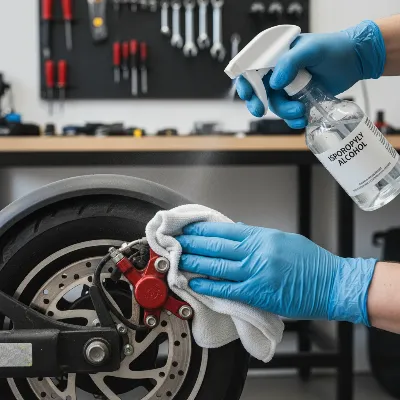 Person cleaning electric scooter disc brakes with alcohol
Step 3: Adjust Brake Caliper Alignment (Disc Brakes)
Misaligned calipers are a frequent cause of squeaking and uneven pad wear. Adjusting the alignment ensures the pads make even contact with the rotor.
To align disc brake calipers, locate the two bolts that secure the caliper to the scooter frame or fork. Loosen these bolts just enough so the caliper can move freely from side to side. Next, firmly squeeze the brake lever and hold it down. While holding the lever, tighten the two caliper mounting bolts alternately, a little at a time, until they are snug. This action automatically centers the caliper and aligns the pads with the rotor. Release the brake lever and spin the wheel. The wheel should rotate freely without any rubbing or squeaking. If there’s still rubbing, repeat the process, making tiny adjustments to the caliper position as you tighten the bolts, until the wheel spins smoothly.
Step 4: Adjust Brake Cable Tension (Mechanical & Drum Brakes)
Proper cable tension is vital for responsive and quiet braking in mechanical and drum brake systems.
Barrel Adjusters
For mechanical disc brakes or some drum brakes, you’ll find barrel adjusters near the brake lever on the handlebar and/or at the caliper. Turning the barrel adjuster counter-clockwise will increase cable tension, making the brakes more responsive. Turning it clockwise will loosen the tension. Make small adjustments, then test the brake lever feel and wheel spin.
Drum Brake Nuts and Lever Adjustments
If your scooter has drum brakes, you might need to adjust the nuts on the brake cable near the drum itself. Tighten these nuts a couple of turns to increase tension. For brake levers, some models have a nut near the lever (often labeled “3” in manuals) that can be loosened to tighten the overall brake tension. After adjusting, ensure the brake lever feels firm and the wheel spins freely when the brake is not applied. Always make small adjustments and test frequently.
Step 5: Replace Worn or Damaged Brake Pads
If cleaning and alignment don’t solve the squeak, or if your pads are visibly thin or damaged, it’s time for a replacement.
Brake pads are a consumable item and will wear out over time. When inspecting, if you see that the friction material is significantly reduced (less than 1/8-inch thickness), cracked, or has metal scoring, replacement is necessary. Removing old pads typically involves unfastening a retaining pin or bolt that holds them in the caliper. Carefully slide out the old pads, then insert the new ones, ensuring they are seated correctly.
Bedding In New Pads
After installing new brake pads, it’s essential to “bed them in.” This process involves a series of controlled stops that transfer a thin, even layer of friction material from the pads to the rotor, optimizing braking performance and reducing noise. Ride your scooter at a moderate speed (around 10-15 mph) and apply the brakes firmly but not to a complete stop, repeating this about 10-20 times. Allow the brakes to cool between sets. This prepares the new pads for optimal performance and helps prevent future squeaks.
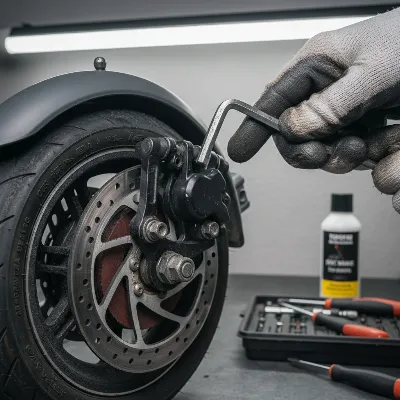 Mechanic adjusting electric scooter brake caliper or replacing pads
Step 6: Addressing More Complex Issues (Warped Rotors, Hydraulic Bleeding)
While many squeaks are resolved with the steps above, some issues might require more advanced intervention or professional assistance.
If you suspect a warped rotor, you might notice the wheel rubbing intermittently even after caliper alignment, or a pulsating feel at the brake lever. Minor warps can sometimes be carefully straightened using a rotor truing tool, but this requires a delicate touch. For significant warps or if you’re uncomfortable, a professional repair shop can assess if replacement is needed. For hydraulic brakes that feel spongy, indicating air in the lines, bleeding the brakes is necessary. This process involves a bleed kit and specific hydraulic fluid. While DIY kits are available, if you’re not experienced, it’s often best to have a professional perform this task to ensure safety and proper function.
Preventing Future Electric Scooter Brake Squeaks
Regular maintenance is the key to a quiet and reliable electric scooter. By implementing a few simple habits, you can significantly reduce the chances of annoying brake squeaks returning.
Regular Maintenance Tips
Proactive care for your braking system will not only prevent noise but also extend the life of your components and ensure your safety.
- Consistent Cleaning Routine: Make it a habit to regularly wipe down your brake rotors and pads. A quick clean with isopropyl alcohol after a dusty ride or weekly can prevent the accumulation of dirt and debris that causes friction and noise.
- Protecting from Moisture: Water is a common enemy of quiet brakes. After riding in wet conditions, dry your scooter’s brakes thoroughly to prevent rust formation on the rotors and other metal components. Avoid storing your scooter in damp environments.
- Quality Components: When replacing brake pads, invest in high-quality, noise-resistant options. While budget pads might seem appealing, they often contain harder materials more prone to squeaking and may wear faster.
- Frequent Checks: Regularly inspect your brake pads for wear and tear, and check the alignment of your calipers. Catching minor issues early can prevent them from escalating into bigger problems. Also, ensure all bolts and screws securing brake components are snug, as vibrations can cause them to loosen over time.
- Read Your User Manual: Every electric scooter model can have unique specifications for its braking system. Your scooter’s user manual provides specific details and advice tailored to your model, which can be invaluable for maintenance and troubleshooting.
Electric Scooter Brake Maintenance Schedule
Following a consistent maintenance schedule helps keep your brakes in top condition and prevents unexpected issues.
- Before Every Ride:
- Test Brakes: Squeeze both brake levers. They should feel firm and responsive. Spin each wheel to ensure it stops smoothly. Listen for any immediate grinding or squealing.
- Visual Check: Quickly look for any obvious damage, loose components, or excessive dirt on the pads and rotors.
- Weekly/Bi-Weekly (or after riding in wet/dirty conditions):
- Clean Brake System: Wipe down rotors and pads with isopropyl alcohol or brake cleaner.
- Inspect Pads: Check brake pads for significant wear or embedded debris.
- Check Alignment: Briefly spin wheels to listen for rubbing, indicating potential caliper misalignment.
- Monthly/Every Few Hundred Miles:
- Detailed Inspection: Thoroughly inspect brake pads for wear (replace if less than 1/8-inch thick). Check rotors for any signs of warping or deep scoring.
- Cable Tension (Mechanical Brakes): Adjust barrel adjusters if brakes feel too loose or too tight.
- Lubricate Pivots: Apply a small amount of silicone-based lubricant to pivot points on brake levers and calipers (avoiding braking surfaces).
Conclusion
Squeaky electric scooter brakes are a common nuisance, but they are almost always a fixable one. By systematically diagnosing the problem, whether it’s dirt, worn pads, or misalignment, and applying the appropriate DIY solutions, you can restore your scooter’s silent and efficient stopping power. Regular cleaning, timely pad replacement, and proper alignment are the cornerstones of effective brake maintenance, ensuring a safer and more enjoyable riding experience. Don’t let a squeak go unheard—a quiet brake system is a healthy one. What regular maintenance tasks do you find most critical for your electric scooter’s longevity?
Câu Hỏi Thường Gặp
How often should I clean my electric scooter brakes?
Ideally, clean your Electric Scooter brakes weekly or after every ride in dirty or wet conditions. Regular wiping with isopropyl alcohol prevents dirt and grime buildup, which is a primary cause of squeaking. A quick clean can drastically improve performance and reduce noise.
Can I use WD-40 on my electric scooter brakes?
Absolutely not. WD-40 or any oil-based lubricant will contaminate your brake pads and rotors, severely compromising your scooter’s braking ability and creating a dangerous situation. Always use specialized brake cleaner or isopropyl alcohol.
How do I know if my brake pads are worn out?
Check the thickness of the friction material on your brake pads. If it’s less than 1/8-inch (approximately 3mm) thick, or if you see visible cracks, scoring, or metal-on-metal contact, they are worn out and need immediate replacement for safety and performance.
Is brake squeaking dangerous?
While an occasional squeak from moisture might be harmless, persistent squeaking can indicate serious issues like worn pads, contamination, or misalignment. If left unaddressed, these problems can reduce braking effectiveness, increasing your stopping distance and potentially leading to dangerous situations.
What is “bedding in” new brake pads?
Bedding in new brake pads is a process of controlled braking that transfers a thin, even layer of friction material from the new pads to the rotor. This optimizes braking performance, ensures consistent stopping power, and helps to prevent squealing noises in the long run.