Nothing disrupts the smooth commute or recreational ride on your electric scooter like the sudden realization of a flat tire. It’s a common issue that many riders face, but it doesn’t have to be a major setback. With the right tools and a clear understanding of the process, you can quickly get your electric scooter back on the road. This comprehensive guide will equip you with the knowledge and steps needed to tackle a flat tire efficiently, helping you minimize downtime and maintain your scooter’s performance. From identifying the type of tire to executing a precise repair, we’ll cover everything you need to know to become your own roadside assistance.
Understanding Electric Scooter Tires and Flat Tire Causes
Before diving into repairs, it’s crucial to understand the different types of tires found on electric scooters and the common culprits behind a flat. Knowing your tire type will guide your repair strategy, while understanding the causes can help you prevent future incidents.
Types of Electric Scooter Tires
Electric scooters typically use one of three main tire types, each with distinct characteristics regarding performance, maintenance, and susceptibility to flats.
- Pneumatic (Inner Tube) Tires: These are the most common type, similar to bicycle tires. They consist of an outer rubber tire and an inflatable inner tube. They offer excellent shock absorption and a comfortable ride, making them ideal for varied terrains. However, they are highly susceptible to punctures and pinch flats if underinflated.
- Pneumatic (Tubeless) Tires: Found on some higher-end electric scooters, these tires don’t use an inner tube. Instead, the tire forms an airtight seal directly with the wheel rim, much like car tires. They provide a similar comfortable ride to inner tube tires but are generally more resistant to punctures. Small punctures can often be sealed with liquid sealant, but re-seating them can require a high-pressure compressor.
- Solid and Honeycomb Tires: These tires are made from solid rubber or a combination of rubber and a honeycomb-like structure. Their main advantage is being completely puncture-proof, eliminating the worry of flats. However, they typically offer a harsher ride with less shock absorption, which can impact comfort and potentially put more stress on the scooter’s frame and components. They also tend to have less grip than pneumatic tires.
|
Our Picks for the Best Electric Scooter in 2026
As an Amazon Associate I earn from qualifying purchases.
|
||
| Num | Product | Action |
|---|---|---|
| 1 | ZIFFY Scooter for Kids with Hand Brake, Foldable Kick Scooter for Ages 6-12, Lightweight Scooter for Boys with 4 Adjustable Heights, ABEC9 Bearings, Supports Up to 260 lbs by Jova |

|
| 2 | isinwheel GT1/GT2 Electric Scooter Adults, 28 MPH Top Speed, 28/37Miles Range, 800/1000W Motor, 330LBS Load, Off-Road Scooter for Adults with Turn Signal (2025 Upgraded Version) |
|
| 3 | Electric Scooter for Adults, Up to 19/23/25Miles, Built in Side/Turn Light, 8.5/10" Honeycomb Solid Tires, Folding E-Scooter with Front/Dual Suspension |
|
| 4 | Electric Scooter for Adults Kukirin G4/G2/G2max, 60V2000W Motor Fast Scooter 43MPH&47 Miles Range, 11 Inch Off-Road Tire Long Range Electric Scooter for Adults |
|
| 5 | Aero Big Wheels Kick Scooter for Kids 6+, Teens & Adults | Light Up Wheels, Hand Brake, Rubber Deck Mat & Shock Absorption | Foldable & Height Adjustable |
|
| 6 | Off Road Electric Scooter for Adult, 48V 13AH Folding E-Scooters, 800W Motor up to 25Mph & 28Miles Range,10" All Terrain Tire Scooter with Dual Suspension & Turn Signal Light |
|
| 7 | Aero Big Wheels Kick Scooter for Kids 6+, Teens & Adults | Light Up Wheels, Hand Brake, Rubber Deck Mat & Shock Absorption | Foldable & Height Adjustable |
|
| 8 | Caroma Peak 800W/1200W Electric Scooter with Seat, Max 15/20/30Miles&20MPH, 14"/20" Tires Foldable Adult Electric Scooter with Basket for Pets & Cargo, Dual Shock Absorbing EScooter for Commuting |
|
| 9 | JBM Adult & Kid Skating Protective Gear Set for Beginner to Advanced, Skateboard Helmet Knee and Elbow Pads with Wrist Guards for Inline Roller Skating, Scooter, Skateboarding |
|
| 10 | Scooters for Kids 8-12, Teens & Adults - Foldable Commuter Scooter with Bell, Hand Brake & Adjustable Height, 220 LB Weight Capacity, Perfect for School, Campus, Park Rides |
|
Why Electric Scooter Tires Go Flat
Flat tires can stem from several common issues, most of which are avoidable with proper maintenance and riding habits.
- Punctures: The most obvious cause, punctures occur when sharp objects like nails, glass, thorns, or debris penetrate the tire. Even small shards can create a leak in pneumatic tires, leading to a slow or rapid deflation.
- Pinch Flats and Underinflation: When pneumatic tires are underinflated, the inner tube can get pinched between the rim and a hard object (like a curb or pothole). This often results in two small holes, resembling a “snakebite,” and is a common reason for sudden deflation. Underinflated tires also experience increased rolling resistance and wear.
- Impact Damage and Wear: Hitting curbs, potholes, or rough terrain at high speeds can damage tires and rims. Over time, tires naturally wear down, losing tread and becoming thinner and more brittle, which makes them more vulnerable to punctures and blowouts. Continuous riding on worn tires can also compromise safety and traction.
Gathering Your Electric Scooter Tire Repair Kit
Being prepared with the right tools is the first step towards a fast and effective repair. A well-stocked repair kit can turn a frustrating roadside stop into a quick fix.
Essential Tools and Materials
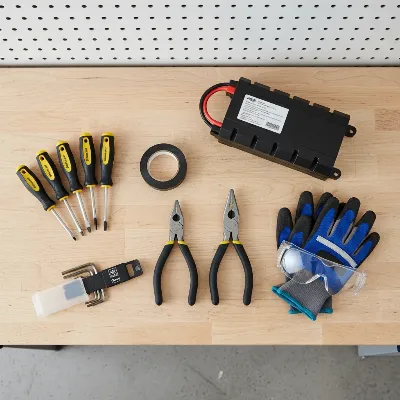
Having these items on hand will make the flat tire repair process significantly smoother, whether you’re at home or on the go.
- Wrenches or Allen Keys: You’ll need these to loosen the axle nuts or bolts that secure the wheel to your scooter. The size required will vary by scooter model, so check your manual or assess the hardware beforehand.
- Tire Levers: These specialized tools are crucial for safely prying the tire off the rim without damaging either component. Two to three levers are usually sufficient.
- Patch Kit or Replacement Inner Tube/Sealant:
- For inner tube tires: A standard bicycle patch kit (including sandpaper, rubber cement, and patches) is essential for small holes. For larger tears or if you prefer a quicker fix, a new inner tube of the correct size is a valuable spare.
- For tubeless tires: A tire plug kit (with insertion tools and rubber plugs) and a bottle of tire sealant are vital for mending punctures without removing the wheel.
- Air Pump: A portable hand pump or a CO2 inflator is necessary to reinflate your tire after the repair. Ensure it has a pressure gauge to inflate to the recommended PSI accurately.
- Soapy Water (Optional but Recommended): A small spray bottle filled with soapy water is excellent for locating hard-to-find leaks in inner tubes or tubeless tires, as bubbles will form at the puncture site.
- Gloves and Cleaning Cloths: To keep your hands clean and to wipe down surfaces during the repair process.
> “A prepared rider is a smart rider. Always carry a basic repair kit; it’s the best defense against unexpected flats.” – Michael Chen, Lead Technician at ElectroRide Solutions
Step-by-Step Electric Scooter Flat Tire Repair
This section provides a detailed guide to fixing a flat tire, focusing on the common pneumatic inner tube setup, with additional advice for tubeless repairs.
Safe Preparation and Wheel Removal
Safety and stability are paramount before beginning any repair.
- Power Off and Secure Your Scooter: Turn off your electric scooter completely. Place it on a stable surface, ideally flipped upside down or propped up using a stand, to provide easy access to the affected wheel.
- Disconnect Components (if necessary): For rear wheels, you may need to carefully disconnect motor wires or brake calipers. Consult your scooter’s manual for specific instructions to avoid damage. Take photos before disconnecting to aid reassembly.
- Loosen Axle Nuts/Bolts: Using the appropriate wrench or Allen key, loosen and remove the nuts or bolts holding the wheel to the scooter’s frame. Keep all hardware organized to prevent loss.
- Remove the Wheel: Carefully slide the wheel off the axle. Be mindful of any washers or spacers that might fall off, noting their original positions.
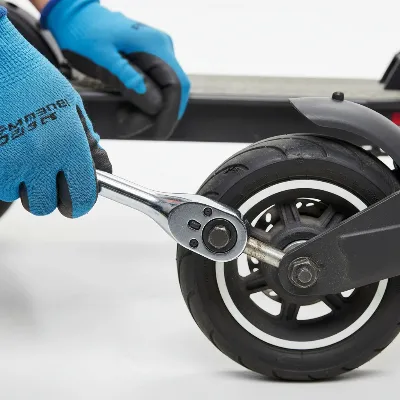 Technician carefully removing a flat electric scooter wheel from its frame with tools.
Deflating and Removing the Tire
Once the wheel is off, you can access the tire for repair.
- Completely Deflate the Tire: Press down on the valve stem to release any remaining air from the inner tube or tubeless tire. This makes it easier to remove the tire from the rim.
- Pry the Tire from the Rim: Insert one tire lever between the tire bead and the rim. Lever it down to hook the bead over the rim. Hold it in place and insert a second lever a few inches away. Work your way around the rim, slowly prying one side of the tire completely off. For stubborn tires, a little soapy water around the bead can act as a lubricant.
- Remove the Inner Tube (Pneumatic Inner Tube Tires Only): Once one side of the tire is off, you can gently pull out the inner tube. For tubeless tires, skip this step.
Locating and Assessing the Puncture
Finding the exact location of the leak is crucial for an effective repair.
- Visual Inspection: First, carefully inspect the outer tire for any visible objects embedded in the tread or sidewall. Remove any sharp debris with pliers or tweezers.
- Inflate and Listen/Feel: For inner tubes, slightly inflate the tube and listen closely for hissing sounds. You might also feel air escaping with your hand.
- Soapy Water Test (Most Reliable): If the leak isn’t obvious, submerge the slightly inflated inner tube (or the entire wheel if tubeless) in a basin of water. Watch for a stream of bubbles, which will pinpoint the puncture site. Mark the spot with chalk or a marker.
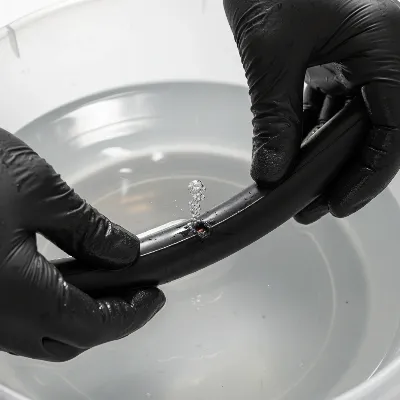 Person using soapy water to find a puncture on an electric scooter inner tube.
Repairing the Damage: Patching or Replacing
The repair method depends on whether you have an inner tube or tubeless setup, and the severity of the damage.
Repairing Inner Tube Tires
- Patching Procedure:
- Clean and Roughen: Clean the area around the puncture thoroughly with an alcohol wipe or sandpaper provided in your patch kit. Roughen the surface gently to help the adhesive bond.
- Apply Adhesive: Apply a thin, even layer of rubber cement over the roughened area, extending slightly beyond the patch size. Allow it to become tacky (usually a few minutes, check kit instructions).
- Apply Patch: Peel the backing off the patch and center it over the puncture. Press it down firmly, working from the center outwards to remove any air bubbles. Hold it in place for a minute or two.
- Allow to Cure: Let the patch cure for the recommended time (typically 5-10 minutes) before reinserting the tube.
- Inner Tube Replacement: If the puncture is too large, irregular, or if you prefer a more reliable fix, replacing the entire inner tube is often the best option. Simply dispose of the old tube and insert a new one of the correct size, ensuring it’s slightly inflated to prevent pinching during installation.
Repairing Tubeless Tires
- Using Tire Sealant: For small punctures (up to about 1/4 inch), liquid tire sealant can be injected through the valve stem (after removing the valve core). The sealant coats the inside of the tire and is forced into the puncture by escaping air, sealing the hole as it dries. Inflate the tire and spin the wheel to distribute the sealant.
- Applying Tire Plugs: For larger punctures in tubeless tires, a tire plug kit is used.
- Ream the Hole: Use the reamer tool from the kit to clean and enlarge the puncture site slightly.
- Insert Plug: Thread a rubber repair strip (plug) through the eye of the insertion tool. Coat the plug with rubber cement if provided.
- Push and Pull: Firmly push the tool with the plug into the puncture, leaving a small portion of the plug outside the tire. Quickly pull the tool out, leaving the plug securely in place.
- Trim Excess: Trim any excess plug material flush with the tire surface.
Reassembly and Inflation
Once the repair is done, it’s time to put everything back together.
- Reinsert Inner Tube (Inner Tube Tires Only): If you patched or replaced the inner tube, slightly inflate it (just enough to give it shape) and carefully place it back inside the outer tire. Make sure the valve stem aligns with the hole in the rim.
- Reinstall the Tire onto the Rim: Start by seating one side of the tire bead onto the rim. Then, carefully work the second bead back onto the rim, using your hands and tire levers. Be extremely careful not to pinch the inner tube between the tire and the rim during this step, as this can cause another flat.
- Inflate to Correct PSI: Slowly inflate the tire with your air pump to the manufacturer’s recommended pressure (PSI), usually found on the tire sidewall. As you inflate, check that the tire bead seats evenly around the rim on both sides.
- Check for Leaks Again (Optional but Recommended): A quick spray of soapy water around the valve stem and tire beads can confirm your repair is airtight.
Final Checks and Wheel Reinstallation
The last steps ensure everything is secure and safe for riding.
- Reattach the Wheel: Slide the repaired wheel back onto the axle, ensuring all spacers and washers are in their correct positions. Tighten the axle nuts or bolts securely.
- Reconnect Components: If you disconnected motor wires or brake calipers, carefully reattach them. Double-check all connections.
- Spin the Wheel: Give the wheel a spin to ensure it rotates freely without rubbing or wobbling.
- Test Ride (Short Distance): Perform a short test ride in a safe area to confirm the repair holds and the scooter handles correctly before resuming your journey.
Preventing Flat Tires on Your Electric Scooter
An ounce of prevention is worth a pound of cure, especially when it comes to flat tires. Proactive measures can significantly reduce the likelihood of getting stranded.
Maintaining Optimal Tire Pressure
This is arguably the most crucial preventative measure for pneumatic tires.
- Regular Checks: Check your tire pressure every 1-2 weeks, or more frequently if you ride daily or carry heavy loads. Underinflation is the leading cause of pinch flats and also reduces range and handling.
- Use a Pressure Gauge: Don’t rely on “feeling” the tire. Use a reliable pressure gauge to ensure your tires are inflated to the manufacturer’s recommended PSI, which is usually printed on the tire sidewall.
- Benefits: Correct tire pressure prolongs tire life, enhances ride comfort, improves efficiency, and drastically reduces the risk of punctures.
Mindful Riding and Road Hazards
Your riding habits play a significant role in tire longevity.
- Avoid Debris: Always be aware of your surroundings and try to avoid riding over glass shards, nails, sharp rocks, or other road debris.
- Navigate Curbs and Potholes Carefully: Hitting curbs or potholes directly, especially at speed, can cause impact damage or pinch flats. Slow down and approach obstacles at a right angle, or lift your weight slightly off the scooter as you go over them. Better yet, avoid them entirely.
- Avoid Overloading: Riding with excessive weight can strain your tires, making them more susceptible to damage and wear. Adhere to your scooter’s maximum load capacity.
Utilizing Protective Measures
Several accessories and tire types can offer an extra layer of protection against flats.
- Tire Sealants (Slime): Liquid sealants can be injected into pneumatic tires (both inner tube and tubeless) to automatically seal small punctures as they occur. They’re a popular and effective preventative measure.
- Tire Liners: These are strips of flexible, tough material inserted between the inner tube and the outer tire. They provide an additional barrier against punctures from sharp objects and are suitable for inner tube setups.
- Puncture-Resistant or Heavy-Duty Tires: When replacing tires, consider opting for models advertised as “puncture-resistant” or “heavy-duty.” These often feature thicker rubber or reinforced layers to offer greater durability, though they might be slightly heavier or offer a marginally stiffer ride.
When to Seek Professional Electric Scooter Repair
While many flat tire repairs are manageable for the average rider, there are instances where professional help is the smarter choice.
If you’re unsure about any step of the repair process, can’t locate the puncture, or if the damage is extensive (e.g., a large sidewall tear, damaged rim), it’s best to consult a professional electric scooter technician. Issues involving motor wheels (especially rear wheels) can be complex due to integrated wiring and components, making professional assistance advisable to prevent further damage. Additionally, if you frequently experience flats despite preventative measures, a professional can diagnose underlying issues or recommend more robust solutions.
Conclusion
Experiencing a flat tire on your electric scooter can be an unexpected inconvenience, but it doesn’t have to ruin your day. By understanding the types of tires, carrying an essential repair kit, and following a methodical step-by-step repair process, you can quickly and effectively fix most punctures yourself. More importantly, adopting preventative measures like maintaining proper tire pressure, riding mindfully, and utilizing protective accessories can significantly reduce the frequency of flats, ensuring a safer and more enjoyable riding experience. Don’t let a flat tire deflate your spirit; empower yourself with these repair skills and ride on with confidence. What’s your go-to preventative measure for keeping your scooter tires in top shape?
Frequently Asked Questions
What PSI should my electric scooter tires be?
The ideal tire pressure (PSI) for your electric scooter is typically printed on the sidewall of the tire itself. It varies by model and tire size but generally ranges from 30 to 50 PSI. Always refer to your scooter’s or tire’s specific recommendations for optimal performance and safety.
How often should I check my electric scooter tire pressure?
It is recommended to check your electric scooter tire pressure every 1 to 2 weeks, especially if you ride frequently. Tire pressure can fluctuate with temperature changes and natural air loss, so regular checks are vital to prevent flats and maintain optimal riding conditions.
Can I use car tire sealant in my electric scooter?
While some car tire sealants might work, it’s generally best to use a sealant specifically designed for bicycle or Electric Scooter tires. These are formulated to be compatible with smaller tire volumes and materials, preventing potential issues with the valve stem or inner tube lining.
How long does it take to fix an electric scooter flat tire?
For an experienced individual with the right tools, fixing a pneumatic inner tube flat tire can take anywhere from 30 minutes to an hour, including wheel removal and reinstallation. Tubeless repairs with sealant or plugs can sometimes be quicker, taking 10-20 minutes, while a full inner tube replacement might take slightly longer.
Are solid tires better for electric scooters to avoid flats?
Solid tires are indeed puncture-proof, eliminating the risk of flats. However, they come with trade-offs: they typically offer a much harsher ride due to lack of air cushioning, provide less grip, and can transmit more vibrations to the scooter’s components and the rider. For comfort and traction, pneumatic tires are generally preferred, provided they are properly maintained.